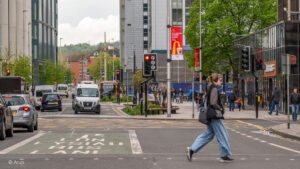
Stirling is known as the city saved by wolves’ legend has it –but now also a place where a pivotal debate on trees, planning and development took place.
The last week’s event was organised by the Trees and Design Action Group (TDAG) and was held on the beautiful grounds of the University of Stirling’s campus. The event attracted high-calibre speakers and chairs and a diversity of attendees – a testament to the reputation of the TDAG cross-sectoral network. Fiona Melville, a professional Forester, Arboriculturist and Tree Risk Assessor who organised the event on behalf of TDAG says:
“We are blown away by the huge support and interest for this event demonstrated by the sheer numbers attending today from across the extensive design, planning and development sectors. – it is fantastic!”
A number of lead partners supported the event: the Arboricultural Association, Central Scotland Green Network, Green Action Trust, and the Institute of Chartered Foresters. GreenBlue Urban was delighted to be a headline sponsor and exhibitor for this event.
The event centred around Scotland’s National Planning Framework 4 which was adopted by the Scottish Ministers on 13 February 2023.
The latest planning framework includes a long-term spatial strategy for the year 2045 as well as several policies that will apply across all 32 Scottish Local Authorities. These policies include, for example, tackling the climate and nature crises by reducing greenhouse gas emissions and building resilience (policy 1) and blue and green infrastructure which is viewed as integral to early design and development (policy 20). Trees are covered in policy 6 on forestry, woodland, and trees whilst its wording does not specifically contain a reference to “street tree” or “urban forest”.
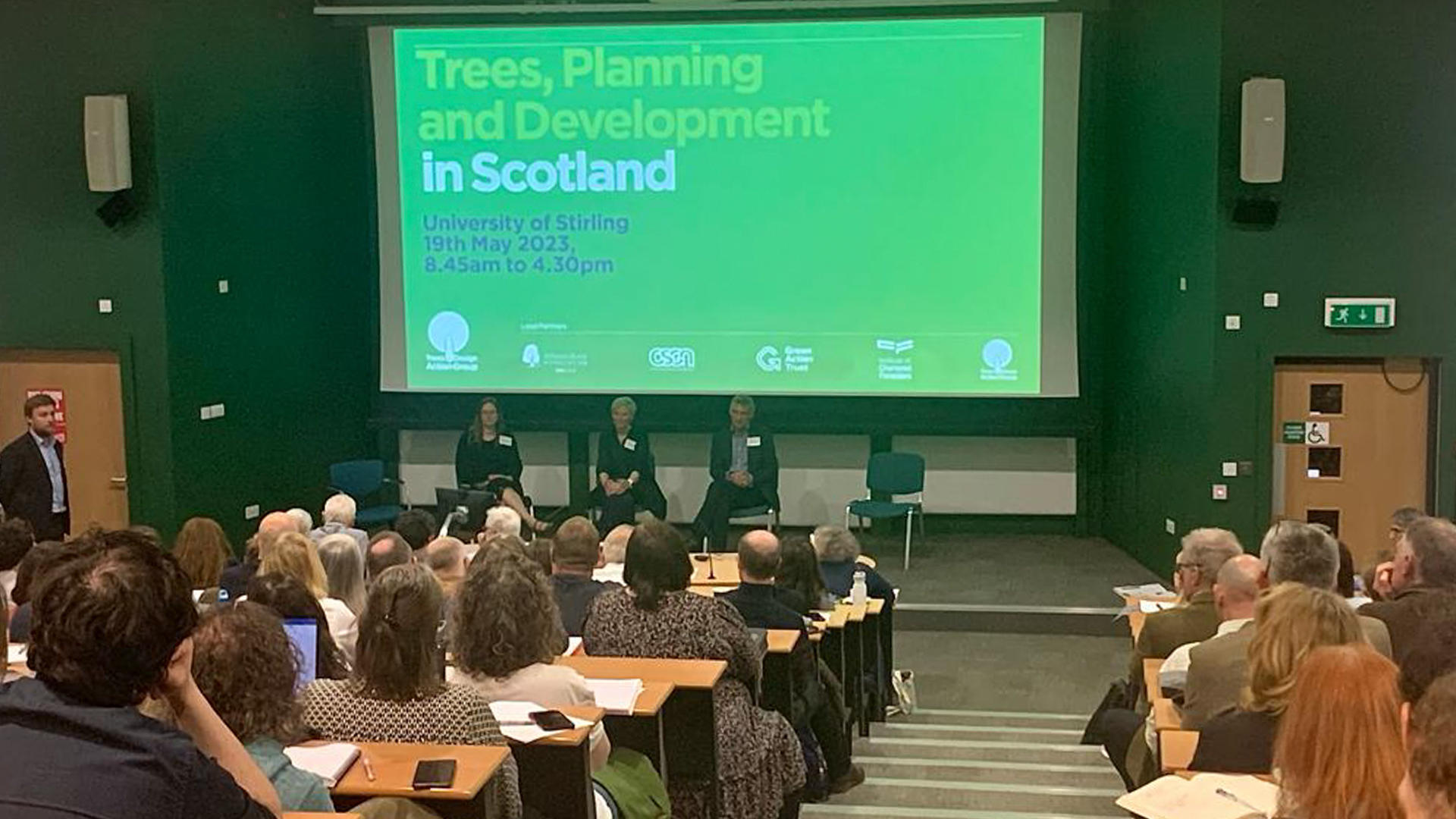
The question posed to delegates at the Stirling event was: How can the planning system, policy and practice help protect and expand our trees and woodlands which make up our urban forests?
The attendees heard from Brian M. Evans, Professor of Urbanism and Landscape, Glasgow School of Art who held the role of a Glasgow City Urbanist. His presentation took us on a tour of the placemaking and place ecosystem concept in Glasgow, from the 1988 Glasgow Garden Festival to the work of the city’s Place Commission. NatureScot, Scotland’s nature agency with 30 years of experience advising the Scottish Government, introduced it’s Developing with Nature guidance, with its 24 measures including rain gardens
Jeremy Barrell of Barrell Tree Consultancy shared examples of supporting the successful delivery of developments whilst ensuring harm to existing trees is minimised. Designing with trees was the subject of a presentation by the architect Kirsty Maguire. A local authority presentation touched on the remit of tree officers and the need for specialist input from arboriculturists, ecologists, and other disciplines. The Green Action Trust introduced the Central Scotland Green Network as one of the largest and most ambitious green infrastructure programmes in Europe, and shared examples of green infrastructure projects delivering in local communities – including a project that had initially a planning application refused due to a lack of parking provision!
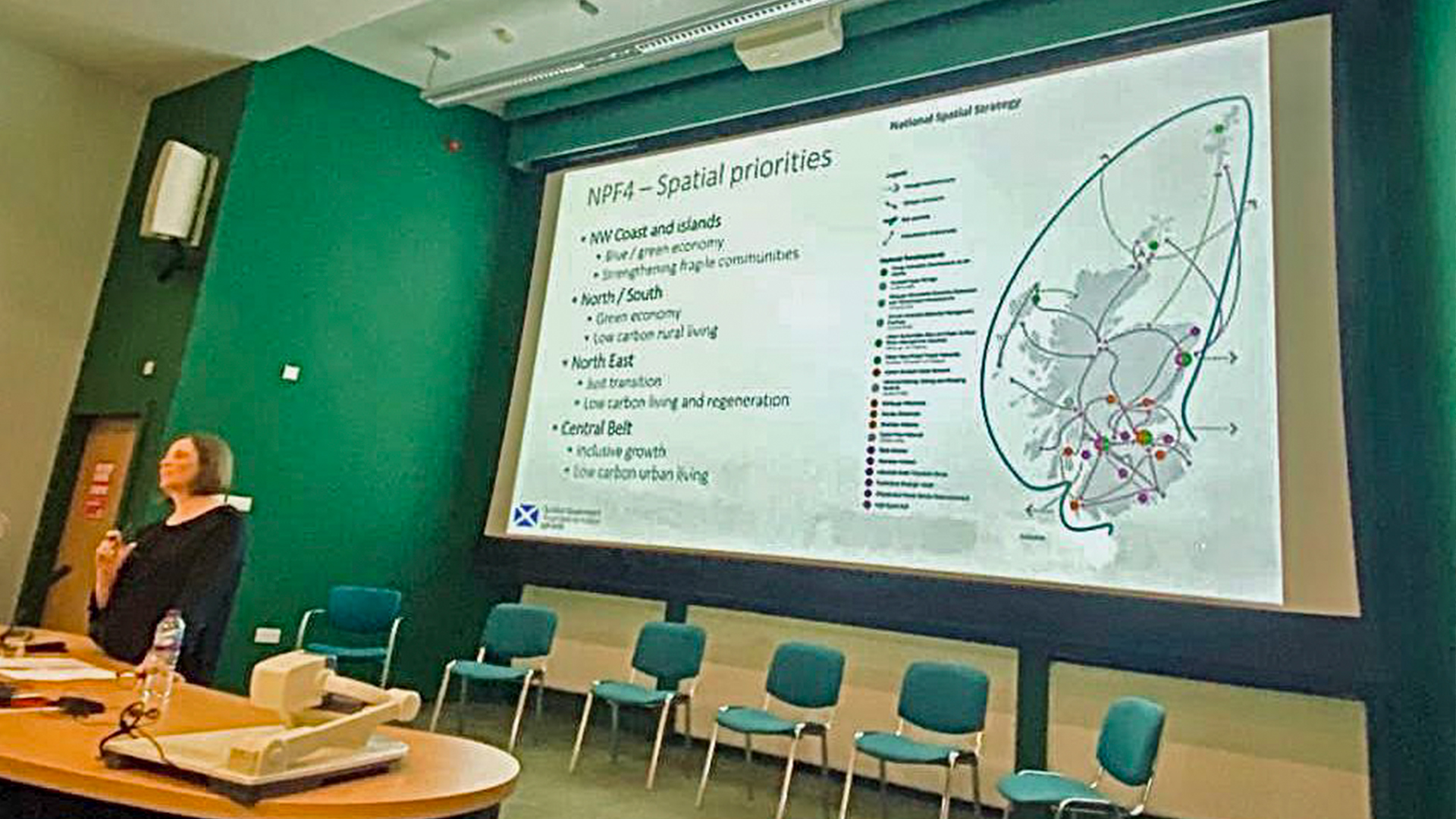
The last presentation was by Dr Fiona Simpson the Scottish Government‘s Chief Planner, herself a tree fan, who introduced the Scottish Government’s Delivery Programme for the National Planning Framework 4. Its priorities include funding and finance, governance, skills, resources, and performance. Quoting Le Corbusier, the famous architect and built environment pioneer. Fiona ended her presentation by reminding the audience:
”The materials of city planning are sky, space, trees, steel and cement; in that order and that hierarchy.”
The conference provided plenty of opportunities for questions and answers and a discussion. Reflecting on the day and summarising key points, the event organiser and Fiona Melville closed the event by noting the importance of working across disciplines, providing leadership, the availability of good information and clear plans to allow planners to fully assess development proposals with positive outcomes for trees and biodiversity, good planting design with conditioned post planting establishment and maintenance plans, having access to good quality (spatial) data, and continuing the conversation between all those who have potential to impact trees, woodlands, hedgerows, indeed all biodiversity, during the planning design and development stages.
Scottish case studies
GreenBlue Urban has supplied blue-green infrastructure solutions to a number of projects across Scotland including:
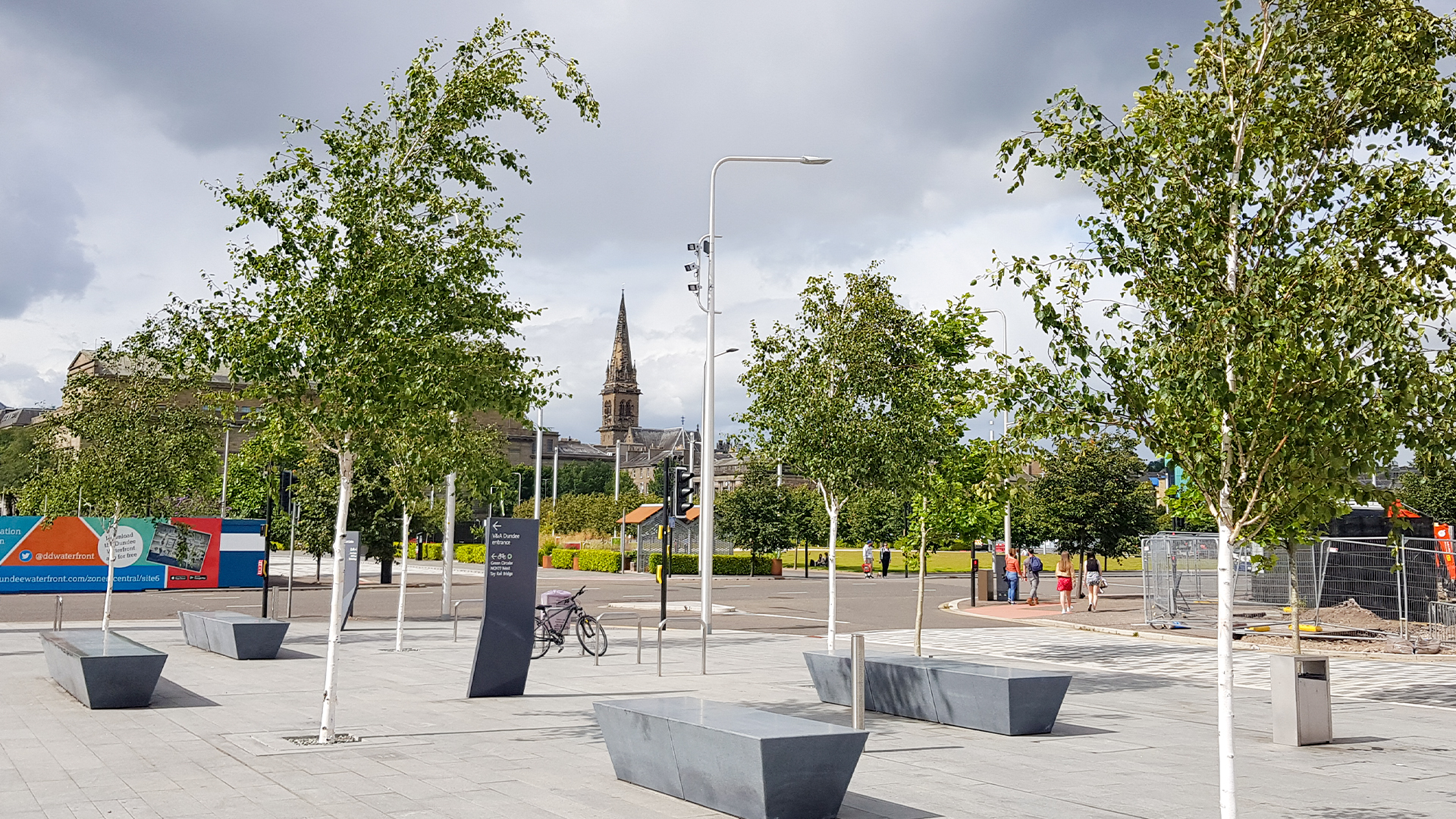
Dundee Waterfront – Phase 2, V&A Dundee Museum, Scotland’s first design museum: an urban tree planting project delivered in 2016 as part of regeneration, led by a vision to transform Dundee into a desired and welcoming destination for both business commuters and visitors. Tree species planted: mainly Betula pendula.
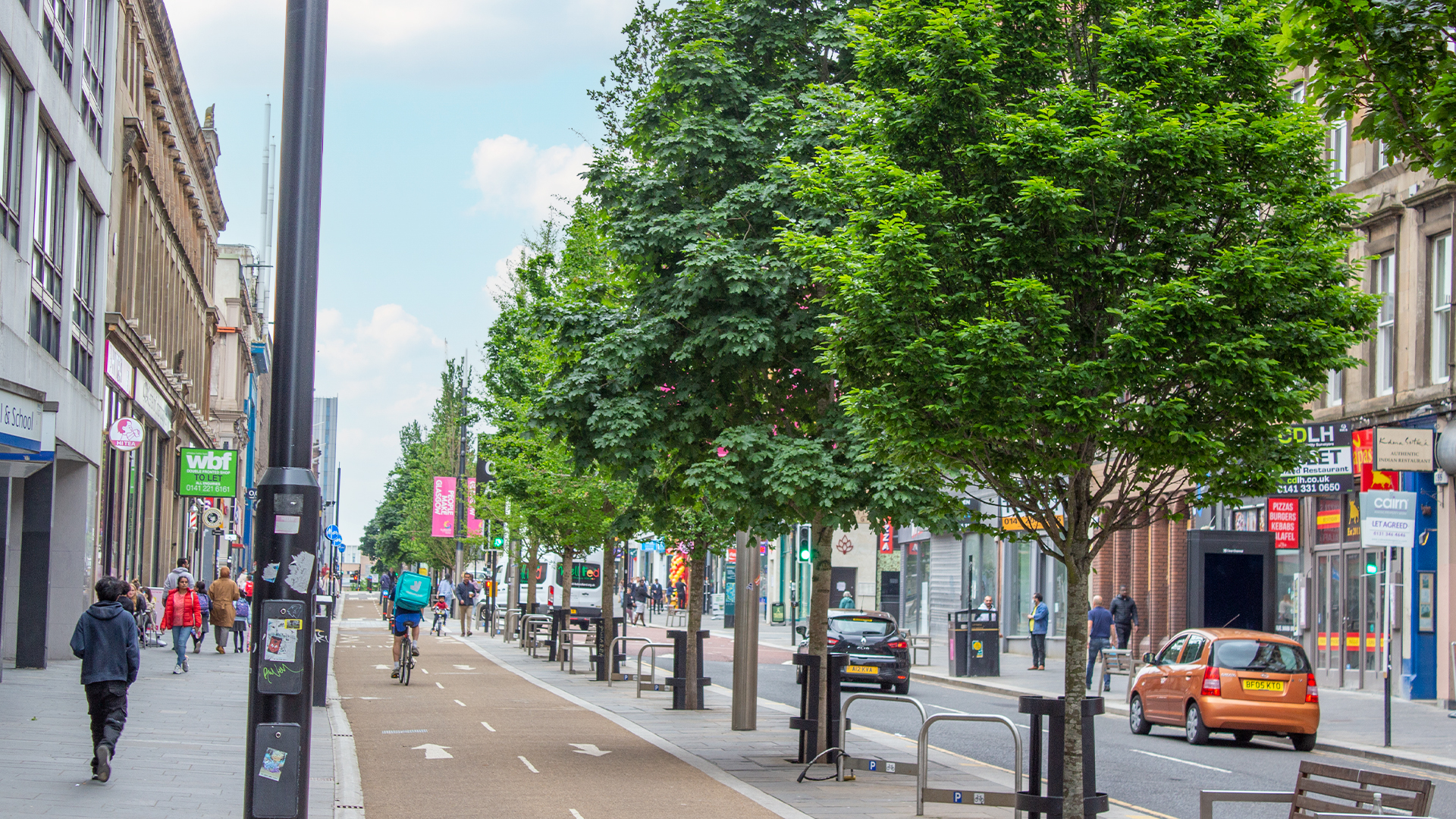
Glasgow, Sauchiehall Street – the first of Glasgow’s Avenues project and a pilot for a place-making scheme that is transforming 17 key streets and adjacent areas in Glasgow city centre through the introduction of an improved environment that will rebalance how people get around, introducing green and smart infrastructure. Twenty-eight specimen trees were planted in full GreenBlue Urban ArborSystems The tree pits are linked together, providing maximum rooting space in uncompacted aerated soil, giving the trees the best opportunity of attaining species potential. A retrofit example, partially attenuating stormwater during high-intensity rainfall events.
Falkirk, Forth Valley College – a new development shortlisted for the RIBA Stirling Prize 2022 and recipient of a number of awards including the National Award (RIBA 2022) GreenBlue Urban provided solutions for planting in both hard and soft surfaces, including underground guying.