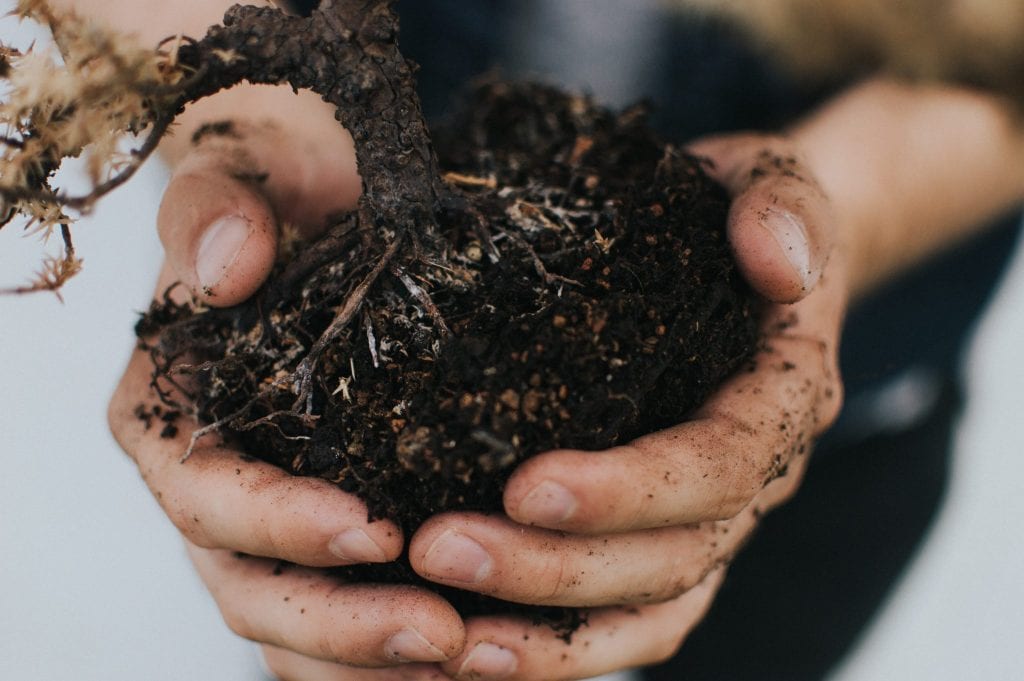
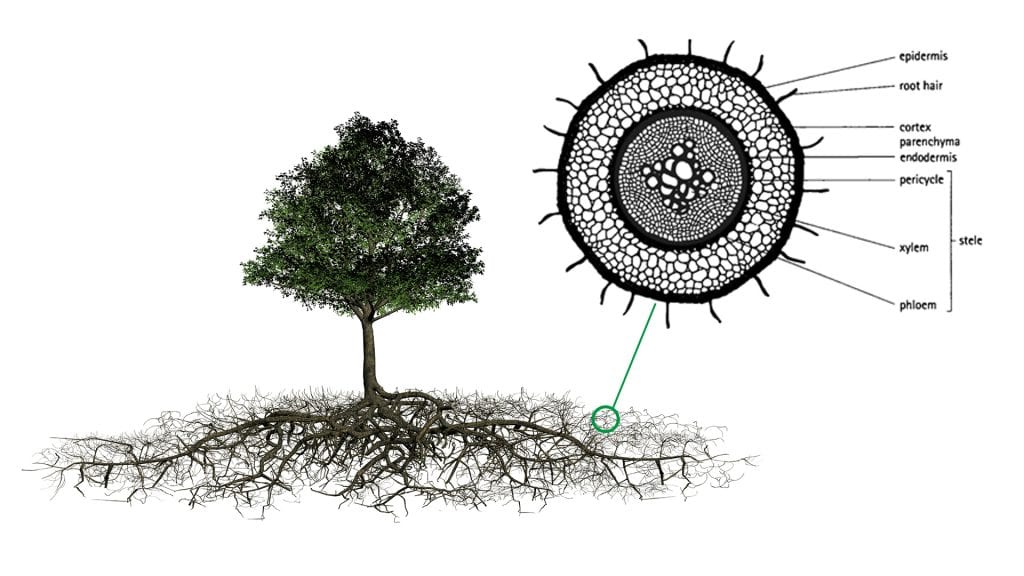
Root physiology is an extraordinary subject and little understood. It is generally assumed that roots absorb moisture from the soil. However, it is only the Piliferous layer of the hydrotropic roots prior to the Meristem of the root activity that carry out this vital function. Here the Epidermis of the hydrotropic root is surrounded by the Piliferous cells which extend out into the surrounding soil. These protuberances are extremely fine and consist of only one cell measurement. It is these cells that absorb moisture through the principle of Osmosis.

Incredibly however, the water molecules are absorbed only into the cell walls, not the cortex of the cells. The water molecules then pass from cell to cell through the cell walls, through the epidermis, into the Parenchyma cells of the root cortex. This is called the Apoplast pathway. The water molecules having got thus far, reach the Endodermis and the Pericycle. Here we have a most extraordinary phenomenon. The Pericycle consists of a ring of cells which contain what is called the Casparian strip. This is a ring of a substance called Suberin which blocks the Apoplast. Here the water molecules pass from the cell walls into the cellular cortex of the Pericycle.
From here, the water molecules then diffuse from cell cortex to cell cortex through microscopic pores in the cell walls called Plasmodesmata. This is now called the Symplast pathway. Finally, the water molecules diffuse into the Xylem vessels which then transport the water through the Vascular system of the tree.
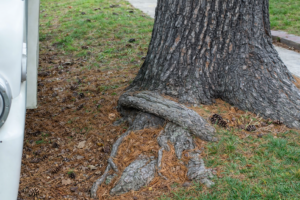
It is these hydrotropic roots that seek out moisture and nutrients and it is essential for root growth that there is sufficient well-structured uncompacted soil with macropores, which creates well aerated soil. However, for good nutrient retention, in an ideal planting situation, the soil composition would include at least 20% clay as well as sand and silt. This is because clay particles carry a negative electric charge. However, when used within a soil cell structure such as RootSpace, this may be marginally reduced to achieve appropriate drainage requirements depending on site location.

Elements in the soils such as Ca², Mg², K, H, Mn², etc, all have a positive charge. As these are dissolved in water forming a nutrient rich solution, they become Cations which (due to there electrical charge) are retained within the soil by the negative charge of the clay particles. The availability of nutrients can be measured by what is called the Cation Exchange Capacity or CEC.
Thus, clay rich soils have a good CEC level. Now, some other types of soil are used in tree planting such as sand-based structural soil like Amsterdam Tree Sand. Whereas this may work in Holland due to the movements of the high water table, sand does not have a CEC capacity and thus does not retain Cations. This means that a soil with a very high percentage of sand cannot retain nutrients and any available nutrient tends to leach down into the subsoils and become unavailable. The Dutch overcome this by applying liquid fertilizers to the soils as part of an annual maintenance plan.
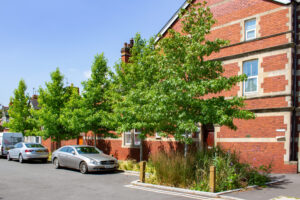
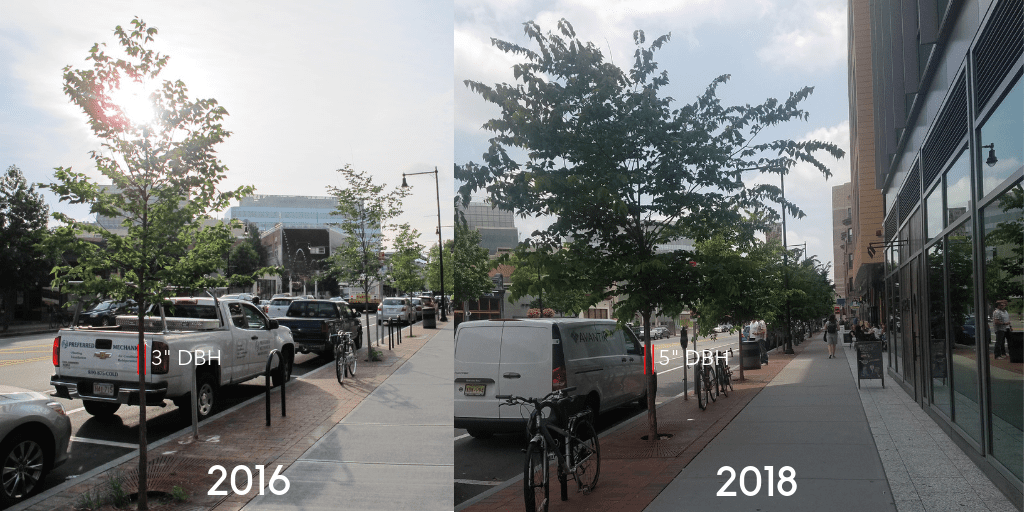
It is therefore critical that when planting specimen trees in an urban environment that quality uncompacted soils with a good CEC level combined with a support structure are used to encourage, support and sustain good root physiology and hence long-term tree growth.