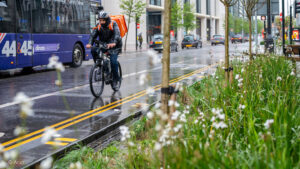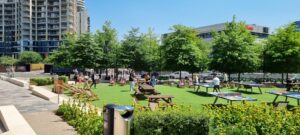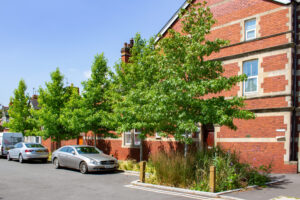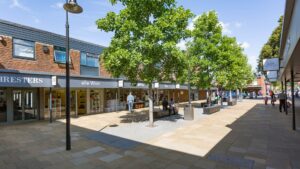
Did you know that the lose of trees on your street could reduce the value of your house by up to 15%? Not to mention the plenty of other benefits they provide too!
You may value trees in your yard or on the street for any number of reasons, such as the wildlife they support, the shade they provide on a hot day, or simply because of their beauty. But can a number be put on that value to determine what is a tree is really worth?
Arborists, landscape architects, and other related professionals have asked the same question, especially in areas with hot climates where a lot of money is spent on air conditioning. How valuable of a commodity is shade anyways? In Sacramento, California a community-owned electricity utility has an online tree benefit estimator that can estimate the number of kWh (and thus the amount of CO2) saved by a tree. Using a tool like this could put a value on an existing tree or predict the value of a new tree planting.
Recent research in Toronto found that around half the shade benefit of urban trees was received by houses not on the lot where the tree was planted. Urban trees typically have quite a high mortality rate, so in practice it’s best to focus on how the tree is planted, more than where the tree is planted. And you don’t have to wait until trees are fully mature to start reaping their benefits, as even young trees provide significant shade.
Trees also provide many other advantages, such as improving air quality, controlling stormwater, reducing noise, and increasing privacy, among others. Of course it’s not easy to include all these benefits in a single measurement, but one way is to look at the effect of trees on house prices. Many researchers from around the world have done this and the consensus is clear – people are prepared to pay more for houses on tree-lined streets or in neighbourhoods with more trees.
Recent research in Australia attempted to look at variables around the increase in property value that trees offered. Like most other research, this study found a large positive effect on house prices for properties with the presence of trees, in fact $16,889 on average. But this effect was found only for street trees, trees actually on the property had no positive or negative effect on the price of the house.
Given that people generally like trees, it’s speculated that this means people may foresee problems with trees on their own property – such as dropping leaves, damage to paving and drains, costs associated with pruning, and possible removal or damage to the house itself in the event of severe weather conditions. However, most of these potential problems can be mitigated with proper tree planting techniques and products.
In short, street trees are extremely valuable, and every effort should be taken to keep them, as losing your street trees could reduce the value of your house by up to 15%.