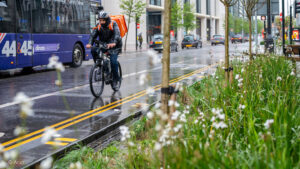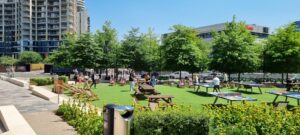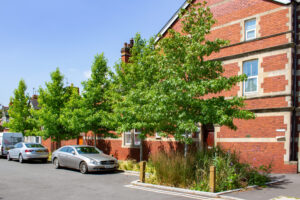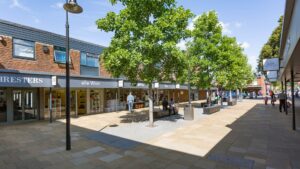
Here we have an assortment of tree species suitable for planting in urban areas. Factors such as ornamental value, hardiness and maintenance were taken into consideration in the selection of these trees.
The tree species outlined below represent the best selection based on a look at urban specie suitability by GreenBlue Infrastructure Solutions. This article offers a brief description of 6 selected species – for a more detailed information on these species and more, download our full guide.
Maple – Acer Campestre (Elsrijk)
- robust, medium-sized tree
- reaches approximately 40 ft in height at maturity
- heavy, calcareous soil preferred, but not too dry sandy soils are also suitable
- possible to create block, cube, or cylinder shapes
Birch – Betula Utilis (Doorenbos)
- attractive white bark
- thin and peeling bark
Beech – Fagus Sylvatica (Dawyck)
- narrow growth habit, ideal for areas of limited space
- reaches 65 to 80 ft in height
- shallow rooting makes it sensitive to road salt
- well-drained soil preference, rich in humus and not too wet
Oak – Quercus Robur (Fastigiate Koster)
- narrow, upright growth habit
- reaches 50 to 65 feet in height at maturity
- branching starts low on trunk
- branches grow upright creating a pleasing, closed shape
- prefers humus-rich and moist but well-drained soil
Poplar – Populus Simonii (Fastigiata)
- initially narrow, upright growing tree that becomes broader
- 100 to 115 feet in height at maturity
- small leaves
- grows in clay (not too heavy) as well as sandy soils, and also tolerates wet soils
Linden – Tilia Cordata (Rancho)
- wind tolerant and ideal for closed road surfacing
- 35 to 40 feet in height
- immune to honeydew and sooty mold
- egg-shaped crown, ultimately 20 to 26 feet wide
- bears sweet smelling yellow flowers in summer
- prefers sandy soil and tolerates drought
In general, these are tree species that do not require high levels of maintenance. Of course even with that in account, city centers and other areas where street trees are planted tend to be areas that receive the most attention, which means maintenance is likely to be more intensive.
The precise amount of maintenance required for any given tree is subject to a number of factors, such as the number of trees per square foot and the size of the trees at the time of planting. Therefore, is it essential when setting up a maintenance plan to also map the budget needed for maintenance.