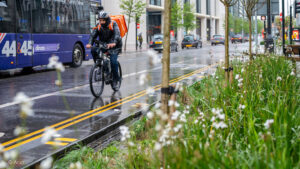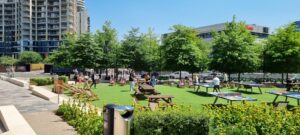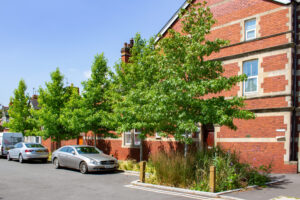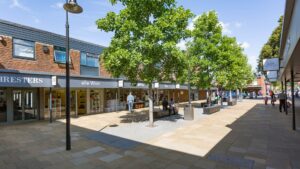
Healthy, properly maintained trees do more than enhance the aesthetics of an environment. The benefits of urban trees are numerous and evident, and encompass many aspects from cleaning the air, to providing shade, to dampening noise, to increasing property value. Not to mention the sustainable element they bring to our urban infrastructures. However, despite the magnitude of benefits, 50% of urban trees do not reach their 10th birthday. That’s one out of every two trees planted! In this article, we discuss what landscape architects and urban planners should be aware of in regards to maintaining healthy urban tree populations. And although GreenBlue manufactures urban tree planting systems, this article sets that aside and explains how a basic understanding of tree biology is the basis for proper urban tree care.
Trees in urban areas face harsh stresses inflicted by the unnatural scene of the city. Soil compaction, underground utilities, and built infrastructure such as streets and sidewalks, all constrain tree roots and create suboptimal growing conditions. Plus the lack of irrigation and aeration common in urban areas, creates a shortage of vital nutrients that can kill trees. Not to mention road salt, pollution, and pesticides used to treat nearby lawns, can all contaminate the air and water that trees receive. Buildings can block their sunlight and gratuitous vandalism, snow plows, weed trimmers, vehicle accidents, and poor pruning can damage their trunks and branches.
Then, after all that, they must also cope with the natural stresses faced by trees including drought, sun scald, insects, bacterial and fungal diseases, and the consequences of severe climatic conditions such as ice and wind storms. One burden builds upon the other with urban conditions intensifying any single stress.
Maintaining urban tree populations is important, and recognizing that a basic understanding of tree biology is the basis for proper urban tree care is critical. Urban tree maintenance falls broadly into three distinct stages which we cover here.
Phase 1 – Establishment
If the tree is to succeed in the long term, correct care in the first three years is vital. Ensure that your program of urban tree maintenance covers:
Watering – Even one instance of drought can have life threatening consequences for the tree. Waiting for leaves to show loss of turgor and drought stress before watering is too late. Ensure watering is proactive and applied deeply enough to be beneficial. The watering should be phased out over three years to encourage the tree to establish its own root system in relation to existing groundwater conditions. For tree plantings in paved areas, irrigation/aeration systems that allow for watering and oxygen exchange underneath the paved surface are often necessary.
Weeding – Competition for scarce water between trees and weeds can be intense. It is good practice to maintain a weed and grass free area around trees. This will also keep damaging trimmers at a distance if in turf areas.
Regular Inspection – Check for tree stability, loosen tree ties as the tree grows and remove them after three years. Countless trees have been strangled by tree ties. Check for early signs of disease, stress, chlorosis etc – quick action will be the most beneficial. Damaged limbs should be pruned carefully. Irrigation/aeration inlets should be checked and cleaned annually.
Phase 2 – Semi-Mature
The tree is now semi-mature and establishing well – maintenance requirements should be low and relate mainly to crown raising, if this is required by traffic constraints. Regular inspection by a municipal arborist or other qualified personnel would be a great advantage in addressing any additional needs.
Phase 3 – Maturity
The final phase as the tree approaches the fully mature stage. Maintenance requirements for mature tree stock can be specialist and extremely varied, so cannot be covered in detail. Again, if the tree pit has been carefully designed and the correct species chosen for the location, maintenance will be very low and the tree can be expected to provide wide ranging benefits for a huge number of people for many years to come.