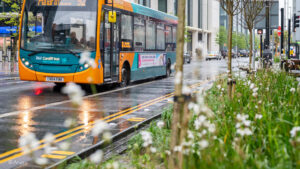
What stood out at UKREiiF 2026, across a range of sessions and conversations, was how often different speakers and disciplines were circling the same ground.
Water, resilience, public realm and stewardship surfaced repeatedly across conversations that had little else in common, and increasingly they were being discussed not as separate considerations to be resolved by separate disciplines, but as part of the same joined-up development challenge.
The convergence was striking because it came from different directions. Speakers approaching the question from planning, engineering, delivery were all, in their own terms, making the case for earlier integration, longer-term thinking and a more connected understanding of what infrastructure actually means. The fact that it cut across professional and industry boundaries was significant.
Beyond Drainage Compliance
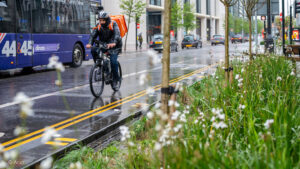
The conversation around SuDS and urban greening has evolved. It feels less like a compliance conversation and more like a place-making one, and that shift in framing was evident across the event, not only in sessions directly focused on water management.
GreenBlue Urban hosted a panel on nature-based SuDS, chaired by Shane Frost and featuring John Simpson, Kelly Haynes, Tim O’Hare, Paul Hargreaves and Carl Hodgson. The standing-room-only response, with people gathered at the door of the marquee, reflected how much appetite there is for this discussion. More telling still was how closely the themes from that session mirrored what was being said across the wider event. The panel brought together perspectives from policy, engineering, soil science and project delivery, and what emerged was less a set of isolated arguments than a shared picture of how water-sensitive, landscape-led thinking needs to be embedded into the development process from the start.
The message, from multiple directions, was consistent: water and soil should help shape development from the outset, not be worked around once everything else has been fixed. SuDS introduced after levels, services and layouts have been determined will always be a compromise. Designed in early, they become a driver of layout, a shaper of public space and a foundation for long-term place performance.
Kelly Haynes made the case clearly for moving away from defaulting to large strategic systems alone, and instead capturing water at source wherever possible through distributed interventions that deliver multiple benefits at street and plot level. Paul Hargreaves reinforced the same point from a delivery perspective: water should help shape development layout, not be treated as something to resolve afterwards.
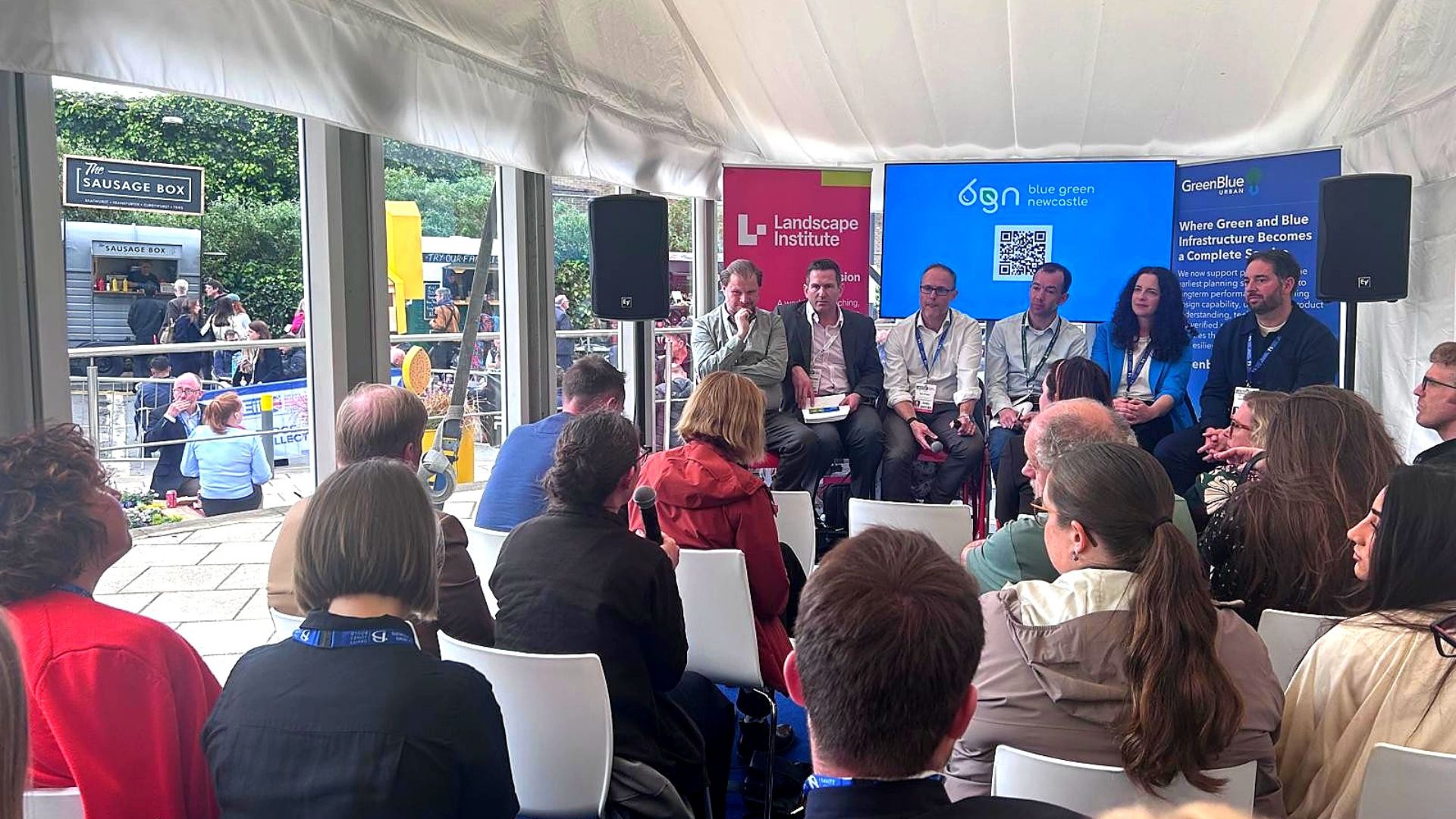
Great to see a packed room for the UKREiiF panel, exploring how nature-based SuDS can be delivered at scale.
Source Control, Social Infrastructure and Stewardship
Several ideas came through with particular force, reflecting a broader maturation in how the industry is approaching this agenda.
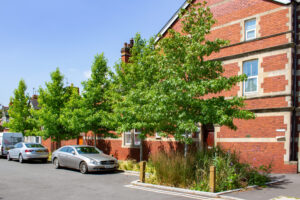
The first is the case for distributed, capture-at-source approaches. There was strong support for moving away from large traditional systems, ones detached from the places people actually experience, and toward interventions at street and plot level that deliver water quality, biodiversity, amenity and resilience benefits together. This is not a new argument, but the breadth of support for it across different sessions and speakers suggested it is becoming harder to push back against.
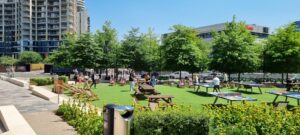
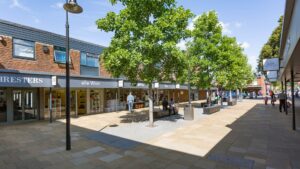
The second is SuDS as social infrastructure. John Simpson highlighted the importance of bringing social infrastructure more clearly into the discourse around SuDS, particularly in relation to public realm, stewardship and long-term value. This framing matters because it shifts the conversation toward creating places that function better socially, environmentally and economically over the long term, neighbourhoods that are greener, cooler, more resilient and more pleasant to move through, that support active travel, encourage community use and help people adapt to a changing climate. The water-sensitive city is not purely a technical aspiration. It is a quality-of-life one, and making that case clearly and consistently is part of how the agenda gains broader political and public support.
The third is stewardship. It came up repeatedly across the event, and rightly so. Stewardship is not an afterthought to infrastructure delivery, it is part of what makes infrastructure work over time. Schemes designed without a clear long-term stewardship model often underperform, and this is as true for tree pits and rain gardens as it is for any other piece of built infrastructure. The growing recognition that stewardship needs to be part of the conversation from the earliest stages of project development, rather than something resolved at the end, represents a meaningful shift in how the industry is approaching long-term place management.
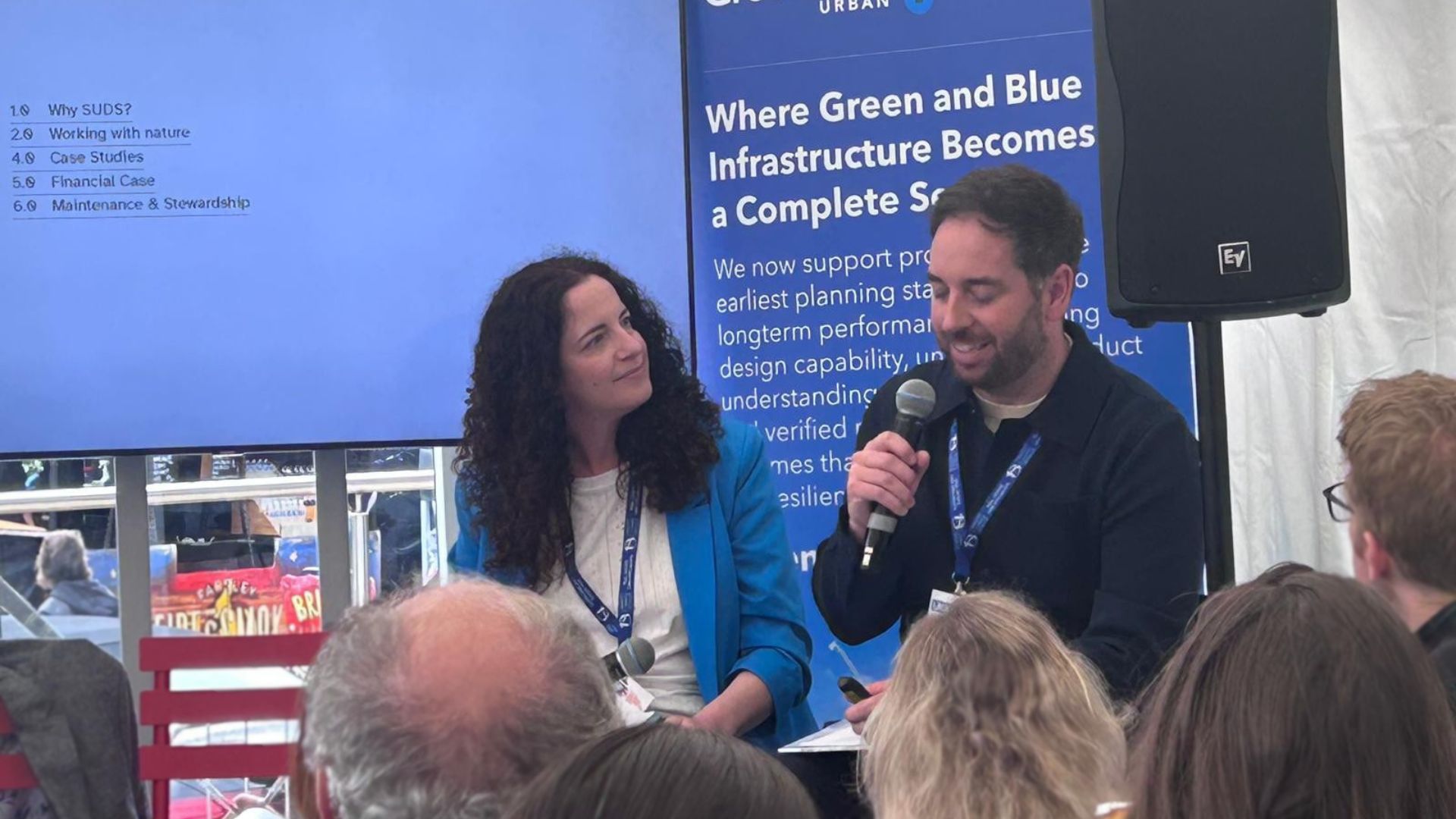
John and Kelly sharing practical perspectives on nature-based SuDS at scale.
Soil as a Critical Asset
Tim O’Hare’s contribution to the panel addressed something that remains underweighted in many development conversations. Soil is central to SuDS performance, to landscape health and to long-term resilience, and it needs to be understood and protected as an asset rather than treated as a construction material to be managed around. If soil is poorly specified, compacted or contaminated during the construction process, even well-designed SuDS systems can fail to deliver the outcomes expected of them.
The performance of nature-based infrastructure depends on the performance of the soil within it, and that means soil needs to be part of the conversation at design stage, not something addressed as a problem after the fact. Treating soil as a critical multifunctional asset from the outset is part of what separates projects that perform from those that disappoint.
Integration as Practice, Not Principle
One of the clearest and most consistent messages across UKREiiF was that integration and collaboration cannot be treated as aspirational language. They are practical necessities, and the difference between schemes that deliver and schemes that underperform often comes down to whether the right conversations happened early enough and between the right people.
Successful outcomes depend on early coordination between planning, landscape architecture, engineering, soil science, construction and maintenance, not a handover model where each discipline does its part in sequence and passes it on. The decisions that most affect SuDS performance are often made before the detailed design stage, which means the disciplines with the most to contribute to that performance need to be involved before those decisions are taken.
Carl Hodgson’s contribution from Newcastle illustrated what serious, coordinated commitment looks like in practice, drawing on an integrated SuDS strategy focused on green, blue and social benefits, and shaped through genuine stakeholder engagement. It also underlined the urgency of the issue. The Thunder Thursday flood event was a sobering reminder that the cost of inaction is not abstract. It is measured in damaged properties, disrupted lives and long-term community impact, and that the case for practical, coordinated surface water management is not a theoretical one.
A Grounded Optimism
The overall tone at UKREiiF was often difficult, particularly among developers and funders navigating viability pressures, planning uncertainty and cautious capital. Those pressures are real, and the gap between ambition and delivery remains a genuine challenge across the industry.
But within that context, there was also substantial evidence of progress, and it would be a mistake to let the difficult conversations overshadow it. There were real projects being discussed, real commitment from serious organisations, and a genuine sense that integrated green-blue infrastructure is moving from the margins of development thinking toward the centre of it. The economic case, set against the rising costs of flooding, heat, poor public realm and long-term place underperformance, is increasingly difficult to argue against and was largely treated across the event as established rather than still needing to be made.
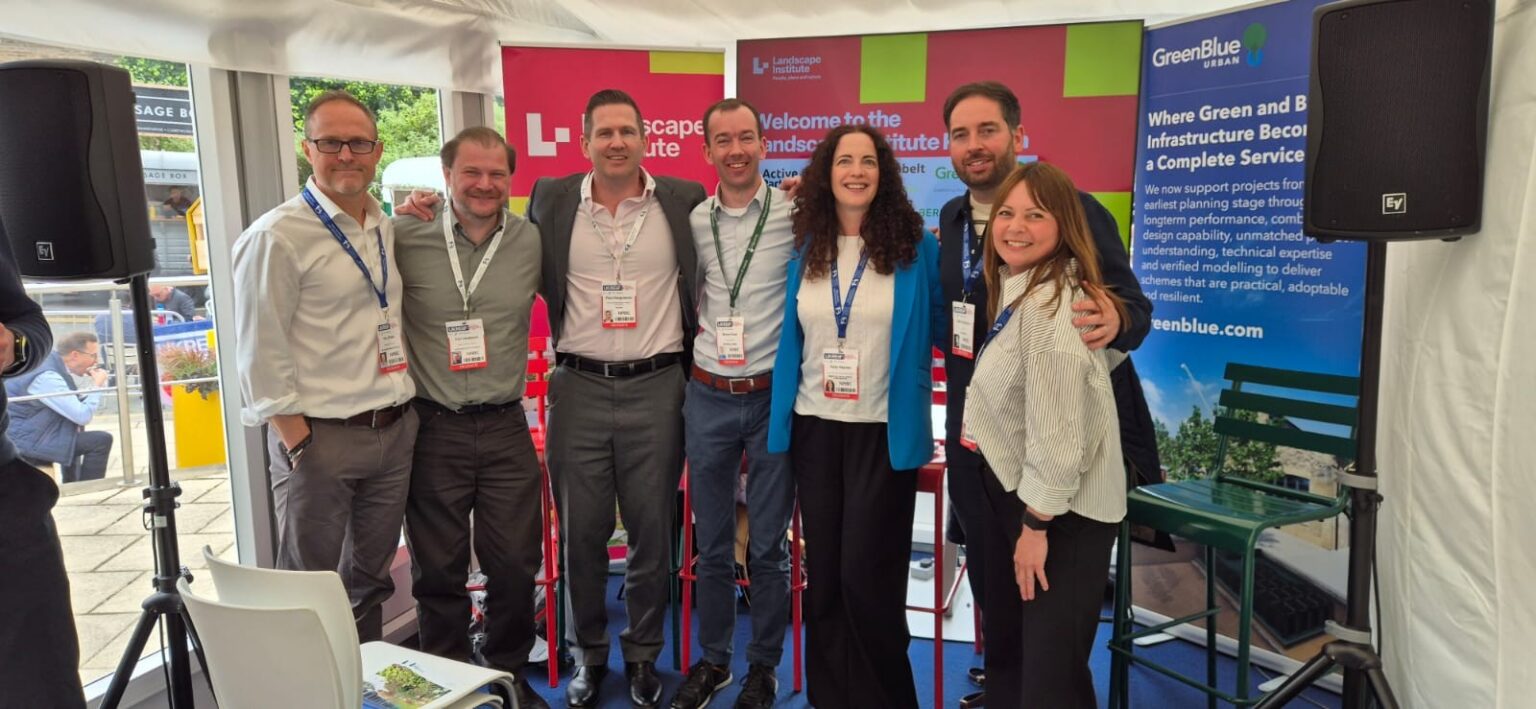
From Left to Right: Tim O’Hare, Carl Hodgson, Paul Hargreaves, Shane Frost, Kelly Haynes, John Simpson, Helen Tidswell
From GreenBlue Urban’s perspective, the event reinforced the importance of integrated thinking around trees, water, soil and public realm as connected systems rather than parallel workstreams. A great deal of the discussion aligned closely with the principles that underpin that work: designing SuDS in early, creating genuinely multifunctional spaces, and treating natural systems as core infrastructure with real long-term value. The conversation is maturing, the task now is to make sure that delivery keeps pace with it.
Thank you to Shane Frost for chairing the session, and to John Simpson, Kelly Haynes, Tim O’Hare, Paul Hargreaves and Carl Hodgson for their insight, experience and candour. Thank you also to everyone who joined the discussion, asked questions and contributed to what was clearly a conversation the industry is ready to have.