It was a pleasure again to visit Palestra – the illustrious venue of TfL and Urban Design London. The seminar was led by Samantha Davenport of the Greater London Authority, detailing the importance of Urban Greening for the capital in order to achieve Biodiversity Net Gain.
Her presentation detailed the fact that London is in fact leading the way in terms of Green Infrastructure with its Ancient woodlands, wetlands, parklands including suburban commons and even forests that have been safe guarded as “essential for the quality of life for all”
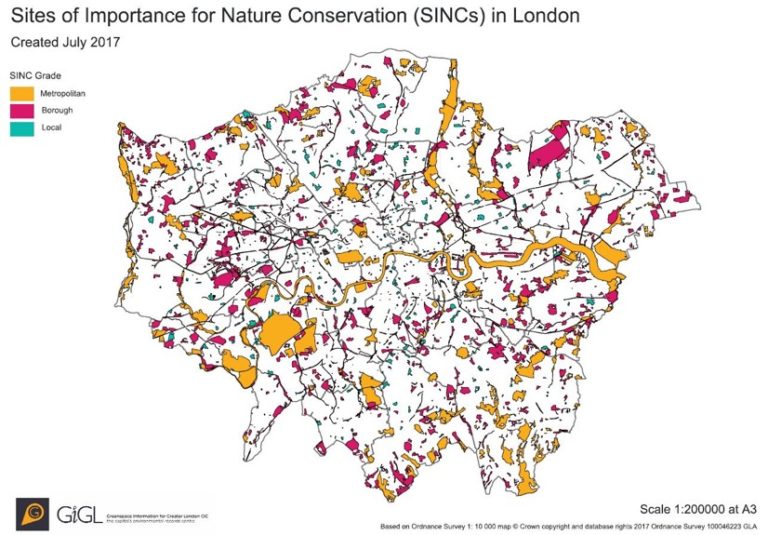
As London’s population grows at a rapid pace accounting for 13.4% of the UK, it is the third most populous city in Europe. Encompassing up 1500 SINC’s (Sites of Importance for National Conservation) space is at its most critical and therefore allowing for Green Infrastructure and providing nature based solutions is paramount.
With the new London Plan imminent Sarah detailed Chapter 8 – Green Infrastructure and Policies G5 on Urban Greening and Policy G6 on biodiversity access to nature, both fundamental elements of site and building design to deliver net gains for biodiversity.
So what is Biodiversity?
Biodiversity is the term used to describe the variety of life on earth. This includes wildlife such as animals, birds and plants; the habitats that are the places they live; and, how they interact with their surroundings as part of the ecosystem. Conserving biodiversity involves restoring and enhancing species populations and habitats as well as implementing measures to promote them in the future.
Quite simply we need more space for nature – Landscaping should consider ecological inspired urban greening.
The term Biodiversity Net Gain is an approach to a development that leaves biodiversity in a better state than before.
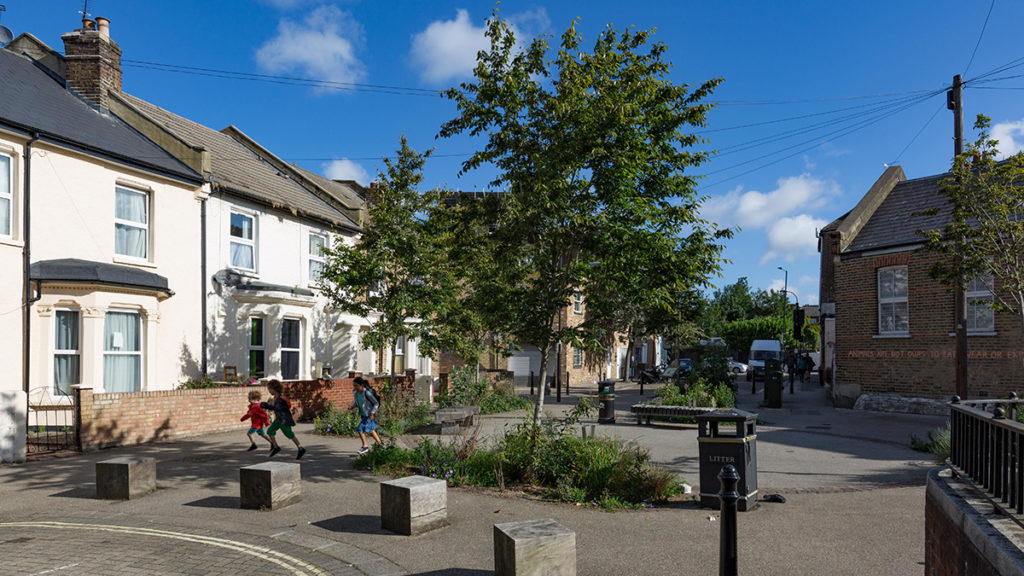
As Sarah quite rightly states you cannot tap biodiversity on at the end, a seamless staged planning approach using Lawton Principals: Better, Bigger, More, Connected.
Alongside policy 5, London boroughs need to develop an Urban Greening Factor – the method of calculating quantity and quality greening on new developments. See more here. However to note highlighting the two should not been confused with one another and that UGF does not supersede the biodiversity metric 2.0 as published by Natural England.
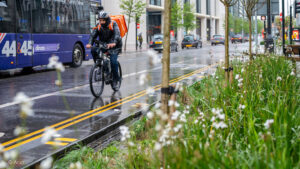
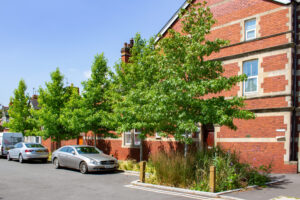
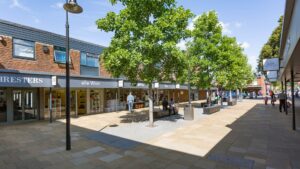
Case studies where revealed with factor levels for calculation including urban tree planting in linked tree pits with adequate soil volumes for tree maturity. Green Walls and Climbing systems rooted in soil, Green Roofs including Podium Planting and Rain Gardens with sustainable drainage elements. It was fantastic to see the simplified approach to enable planners to identify with all means possible and final outcomes.
The captivated audience were then introduced to David Mooney of the London Wildlife Trust who works among 50,000 volunteers with 46 trusts across the UK. Their mission is to work with developers at planning stage and by rather being part of a Multi -disciplinary service to become an Inter-disciplinary service by sharing best practice and working together as a team on development projects from start to finish.
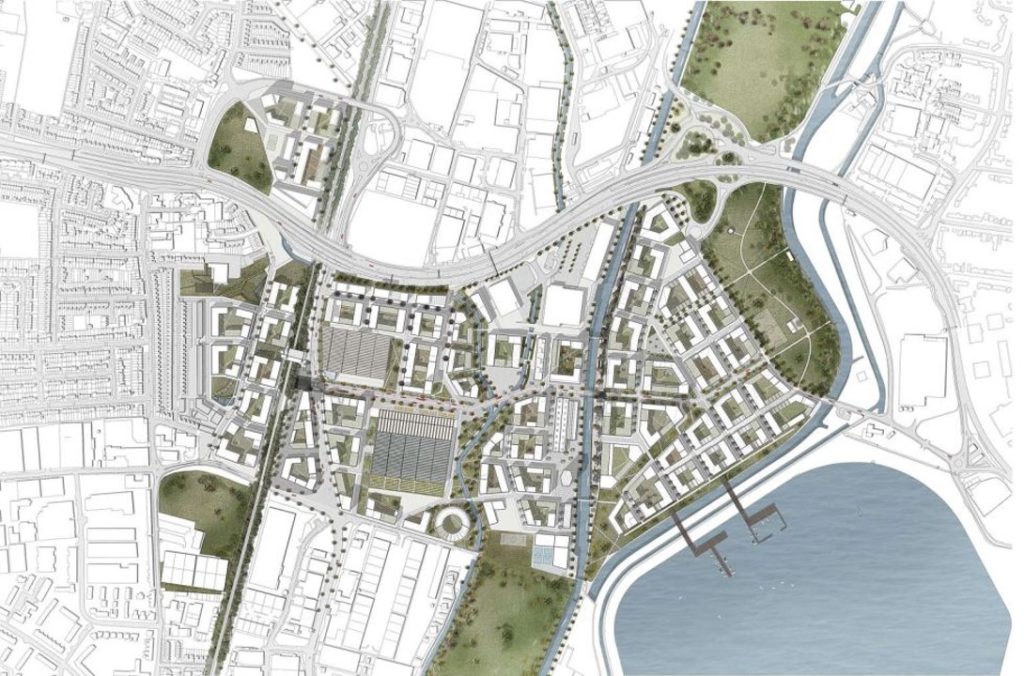
I loved David’s motto, think first how the space will be used by the community. A design led approach should consider “Buildings after Place”
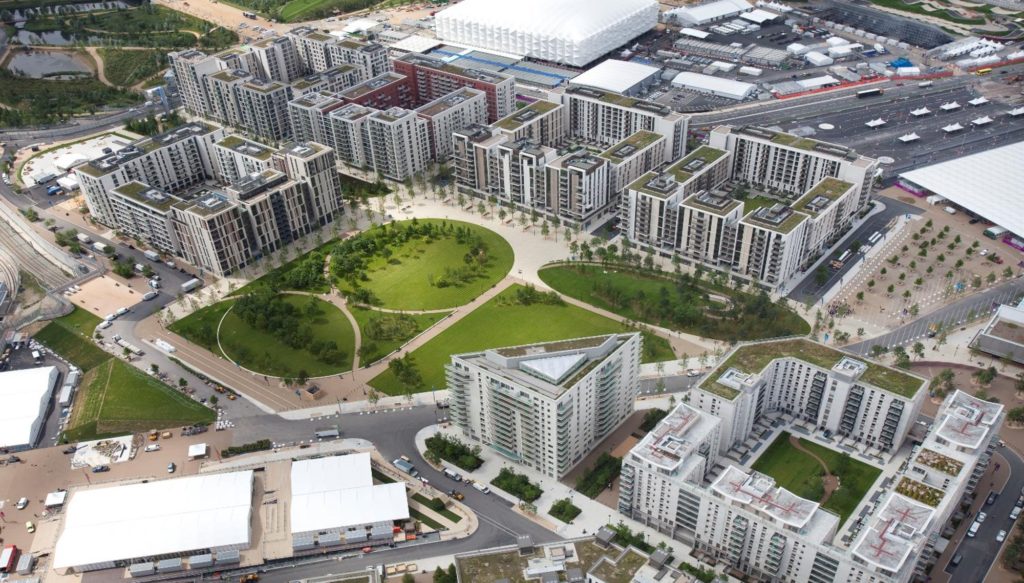
Further case studies were shown whereby new developments are often located next to SINCS and how joint knowledge from the outset has made large scale housing developments possible. Many of these projects have proposed to or do include GreenBlue Urban Tree Planting Solutions including Canada Water and Meridian Water – knowing that a design led approach will enable confidence for all involved – the longevity of the project not just for biodiversity and green infrastructure but for the health and wellbeing for all who live, work and play in the urban environment.