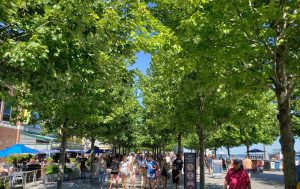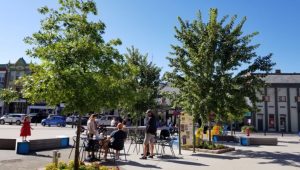
During times of economic crisis, budgets for local authority landscape maintenance have always been under threat. Viewed as a “nice to have” rather than a critical necessity, many local councils facing funding cuts year on year have had to reduce maintenance to testing to minimise future liability claims – but little or no money for planting replacement trees or plants.
In these challenging COVID days, perhaps we should reconsider whether we need a change of thinking. Increasing awareness of the value of our green infrastructure to our physical and mental health is leading to a call to increase our canopy cover, but who is going to care for these new trees?
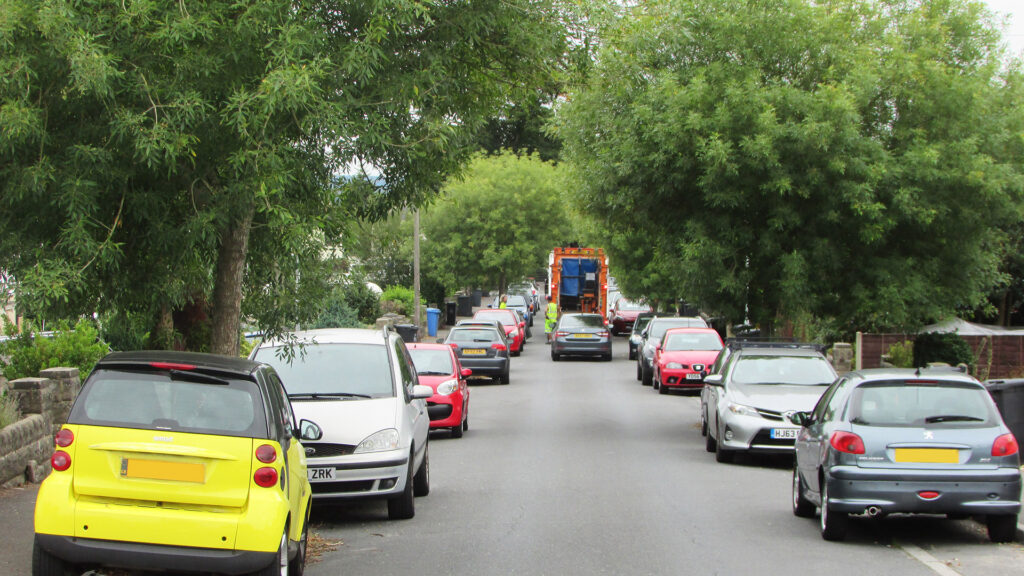
Should those that get the benefit from our urban trees have the responsibility of maintaining them? Should we introduce a “canopy tax” – areas with higher tree cover pay more? Could local residents be equipped and trained and enthused to look after trees outside their own properties?
We here at GreenBlue Urban believe that much of it can be done by dedicated residents. Once a tree has been planted, it needs protection and maintenance for the first couple of years; regular watering, litter clearance, weeding and checking for physical damage. The irrigation requirement is probably the most critical – the past three hot dry summers have seen large numbers of new trees fail due to drought conditions.
Superficial watering with a hose can cause more harm than not watering at all: just dampening the top of the root plate encourages roots to come to the surface, where ironically they are at greater risk from drought in the future. Irrigation bags can help with slow watering, but the best option is a watering tube system, such as the GreenBlue Urban RootRain irrigation system, directing water down to a lower level where the lateral roots can take up water most effectively, This also reduces water wastage – superficial watering tends to lose up to 76% of the water!
The London Borough of Hackney initiated a scheme where local residents are issued with a watering can and asked to water the tree outside their residence using the Root Drencher product, directing water to below the soil surface.
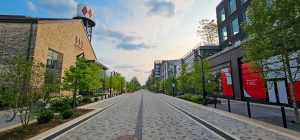
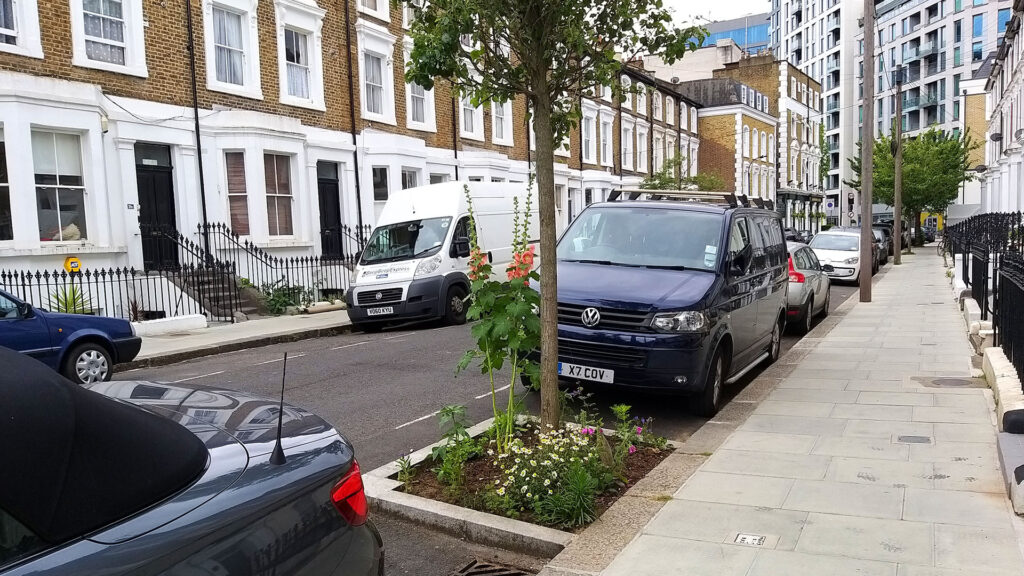
Neighbouring borough Hammersmith & Fulham have had wonderful community spirit with planting flowers within the SuDS tree pits at Overstone Road and maintaning throughout, the residents of the now famous Greener Grangetown have even taken to planting vegetables!
Let’s not forget the voluntary charities that work so hard to promote urban tree planting and involve all such as the Woodland Trust and The Street Trees Project along with the Tree Council who promote working together for the love of trees and to connect people across the UK.
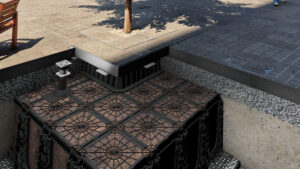
Whilst on-going long-term maintenance will have to be the responsibility of the adopting authority if the tree can survive the critical first five years, maintenance will be minimal. Maintaining healthy street trees does need a professional eye – trimming of epicormic growth, formative pruning, checking for pest and disease can’t be carried out by just anyone. GreenBlue Urban has even carried out some of the maintenance when inspecting trees thriving in GreenBlue Urban ArborSystems!
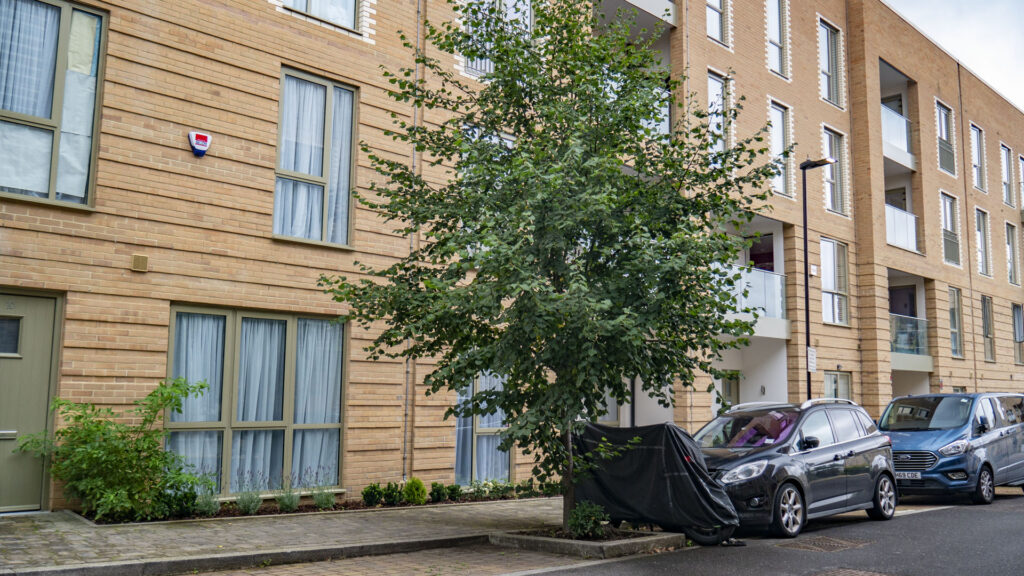
Let’s all work together to create a greener, cleaner, more pleasant place; taking our part in the urban revolution where we are all taking ownership of the landscape for the future – whether planting, watering, caring or protecting our vital urban trees, we may not be able to rely on local authorities to give us the service that we’ve always had. GreenBlue Urban is behind you all the way!