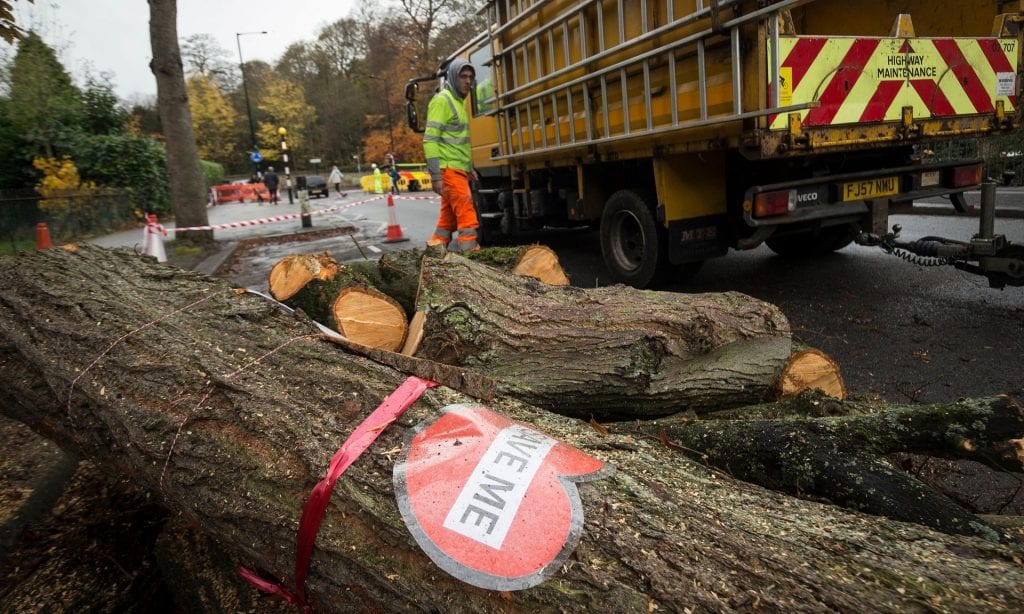
The news of the ongoing debacle between Sheffield City Council and concerned local residents regarding the felling of thousands of street trees has sparked outrage among local residents and has been widely covered for some time in both national and international media.
- “Dawn tree felling in Sheffield sparks outrage”
- “A dawn raid, dissenters silenced: is this a war on trees?”
- “Sheffield trees dispute prompts scenes you’d expect in Putin’s Russia”
This has really drawn the public’s attention to the importance of both the management of PFI contracts and the need for a far more coherent strategy when it comes to the design and implementation of urban trees in any scheme throughout our cities.
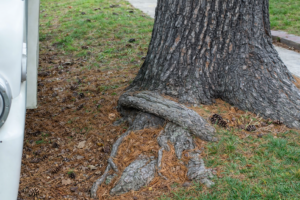
Having followed the coverage of the Sheffield situation, it became clear that simple issues being caused by poor root management were leading the contractors hired by the city council to take extreme measures, such as felling beloved trees at the crack of dawn to avoid confrontation with residents.
Charlotte Markey, GreenBlue Urban’s Head of Public Relations & Strategic Partnerships, travelled to Sheffield to speak at a Sheffield Tree Action Group event. She presented some of the potential solutions to the pavement disruption and to resolve the problems of what Sheffield council have termed ‘discriminatory trees’. Charlotte spoke in support of GreenBlue Urban colleague Jeremy Barrell from Barrell Tree Care, who as an industry-renowned arboricultural consultant was surprised and alarmed at the number of healthy trees being condemned under the contract the council had agreed with Amey, the infrastructure service provider fulfilling the work.

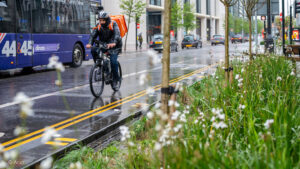
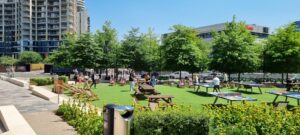
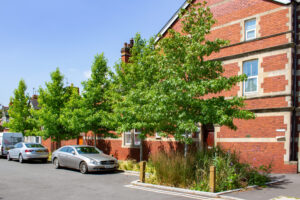
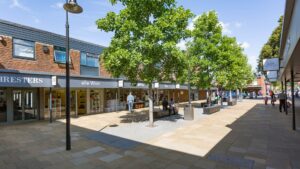
Public engagement is absolutely vital when it comes to planning for the future provision of green and blue infrastructure, and so GreenBlue Urban’s role was to point out the alternatives and tree planting solutions that the council could avail themselves of in order to avoid the need to undertake costly remedial measures when the street trees are perceived to cause safety and accessibility issues. No tree has to be ‘discriminatory’, and, as I informed the large number of attendees at the conference, the provision of good quality tree planting with the correct engineered solutions, including root barrier, root director and soil support systems such as RootSpace and StrataCell, trees can thrive in and around roadways without causing any damage to pavement or other built infrastructure. If roots are directed to a lower soil profile they will not seek the air, water and essential nutrients so close to the hard surface.
At GreenBlue Urban we are committed to innovating and developing new solutions for the problems our cities will face in the future and the challenges we have identified in Sheffield have highlighted the need for a much broader variety of retrofit solutions.