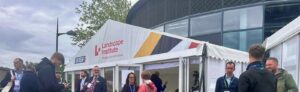
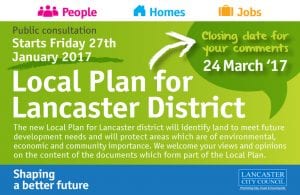
Last week, in a village hall in South Lancaster, Charlotte Markey; PR & Planning Consultant for GreenBlue Urban joined the planning team at Lancaster City Council for one of their public consultation events. They were presenting an ambitious new local plan for the city. There are a number of complex challenges for Lancaster. Lower levels of affordable housing than is desirable, a range of complex industrial sites in the vicinity of the Morecombe coast and a lack of brownfield sites to densify development within the existing city boundaries, all present challenges to the team.
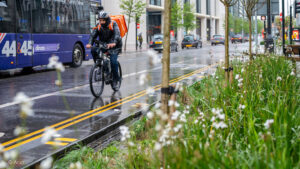
The planners have arguably had to do more with less and so she was fascinated to find out how green and blue infrastructure was integrated into their vision for the city and its periphery and most importantly, how this was to be delivered. After the 2008 crash, a number of the smaller developers went bankrupt. It is larger house builders who come forward to develop strategic sites across the city. With this in mind, the council plans a series of pre application consultations to present their vision of a local plan that will deliver sites which safeguard and enhance the ecosystems services in and around Lancaster. With the advent of new transport networks, including provision of cycling routes and a new rapid transport bus link, there is no better time than to design in nature for future generations of Lancaster.
After a successful bid to bring forward a Garden Village masterplan, announced last week, the planning team can proactively work with potential developers to ensure that high quality public realm with integrated green and blue infrastructure can be implemented. This can be realised with the help of external consultants and in house master planning expertise. This unique opportunity will afford the local authority the opportunity to deliver the housing that the city needs whilst experimenting with creative and innovative designs that will promote the development of a healthier more resilient community, defined by the green and blue character of the scheme.
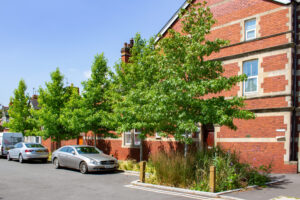
Flooding and the need to mitigate against further pressure caused by increased development has also been a deciding factor in the council’s move towards integrating a SUDs approach. Members of the economic development and regeneration teams, as well as those specialising in affordable housing, all bought in to the idea that whatever type of developments are brought forward, nature based solutions will be integral to an overarching vision for the Local Plan. This vision will meet the needs of first time buyers, those moving into the area in the years to come as well as families and older residents who have owned property in Lancaster for a longer period.