There is no denying that the city of Lincoln and the surrounding authorities enjoy a diverse and beautiful network of green and blue spaces delivering a multitude of ecosystems services.
To the west, the limestone hills and road verges of North and South Kesteven are proving a valuable grassland resource. West Lindsey boasts rich heath and woodland sites to be proud. The commons and green space within the City of Lincoln are also surprisingly rich in wildlife and provide vital health benefits for the people who live around them. Lincolnshire is predominantly rural and so the city itself is of strategic importance, both in terms of the economy and the environment.
Understanding the built environment as an ‘urban ecosystem’ is an approach that sometimes gets overlooked in a policy context across several Local Authorities in the UK. The Greater Lincolnshire Nature Partnership makes specific reference to the urban landscape of Lincoln and provides the following vision:
- Wildlife to flourish in public spaces, with visible displays of native wild flowers.
- New developments are built sustainably with a provision for wildlife.
- Gardens and allotments throughout Greater Lincolnshire are wildlife-friendly.
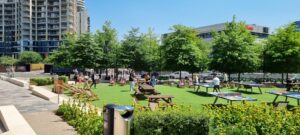
- Accessible natural community green space to enhance wildlife habitats.
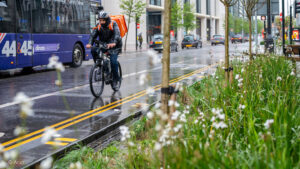
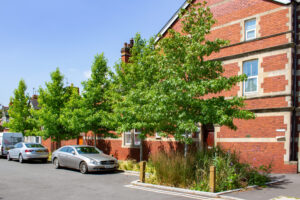
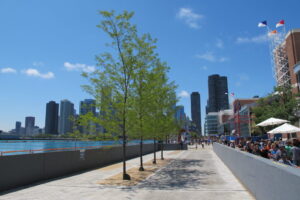
This emphasis on the value of green space to both wildlife and communities’ forms part of a vision that can be fully realised, particularly in urban environments, when private residents and the council work together to value and enhance the networks of green space across all wards of the city. Linear tree pits, using wooded corridors that connect new developments with the waterways and city centre, will enable people and wildlife alike to traverse a more permeable and liveable urban realm. Whilst few Neighbourhood Plans in the city have come forward, the council works hard to engage residents in valuing their natural infrastructure.
A Central Lincolnshire Green Infrastructure Study was commissioned in 2011 which included Lincoln and surrounding authorities. However, there is always a need to refresh and update this evidence base. With difficulties for Local Authorities procuring funding and allocating resources for undertaking this work more frequently, it is difficult to develop policies that reflect the latest data in respect of the ecosystems services being delivered by existing green and blue infrastructure networks. Of course, the planners in the Lincoln city council team face real challenges, having responsibility for some of the most deprived wards in the UK. However, with innovative and creative partnerships across local authority boundaries and with the private sector, nature based solutions can play a role in mitigating some of the adverse impacts of large disparities in the economic and health statistics between wards.
We all have a right to better quality air, access to the natural environment and greener networks to enable more active lifestyles. The new urban extensions on the outskirts of the city provide a real opportunity for the council to showcase the role of urban development as part of a solution to climate change and enhance existing ecosystem services.
Planners in Lincoln have great ambitions for the city. Urban extensions and a new bus station in the centre are all the result of increasing pressure to provide for the diverse needs of the commuters, students and long-term residents. A variety of opportunities can be derived from integrating new and improved, more sustainable transport infrastructure, into growing cities whilst still maintaining the integrity of the older, historic environment.
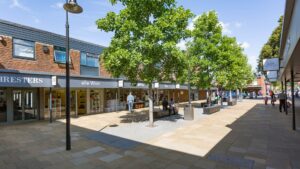
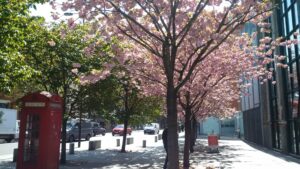
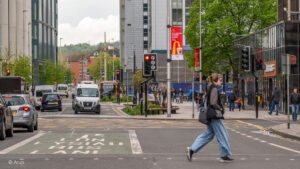
There is often perceived to be a conflict between the ‘grey’ element of transport infrastructure and the integration of green and blue infrastructure. There are a number of solutions to provide high quality public realm for both regular and occasional users of buses in and around the city. Constructed ecosystems such as living walls and green and blue roofs are an option but so too are urban tree pits, which provide an essential SUDs function. In the summer, users can enjoy the shade of mature tree canopy cover and these greener spaces outside of transport hubs provide much needed respite for those who are waiting, or, at the end of long and possibly stressful journeys. Our work at King’s Cross shows the possibility of integrating urban trees in close proximity of transport hubs.