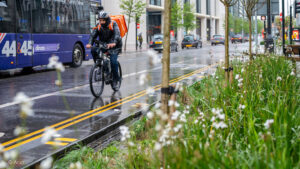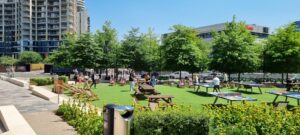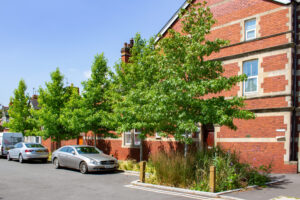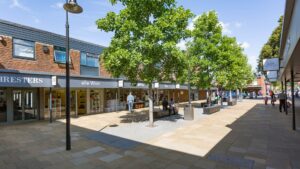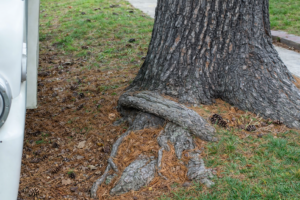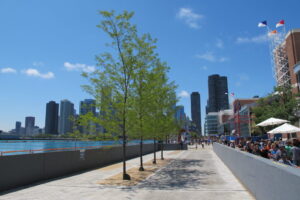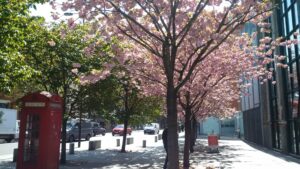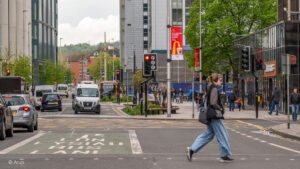
Trees are the heroes of our landscape. A bold claim you think? Possibly. But look at the list of benefits they bring to our lives: ecology, beauty, cooling, shade, Oxygen, removing pollutants from the air, providing homes and food for wildlife and conkers! Let’s face it, who doesn’t have a favourite tree? For National Tree Week at the end of 2020, GreenBlue Urban invited our Twitter followers to vote for their favourite tree. The winner was the English Oak, Quercis robur. A species itself capable of supporting 2300 total species including 38 bird species, 229 bryophytes (those are mosses, liverworts and hornworts), 108 fungi, 1178 invertebrates, 716 lichens and 31 mammals. That’s all in a single tree species. In Britain, there are 32 species of a native tree. You get the picture: the trees are heroes!

It’s more than ecology, it’s liquid engineering
To borrow from the famous Castrol tagline for a second[1], trees are more than ecological heroes they are also heroes in the world of liquid engineering, specifically water engineering. (A quick digression: the original pipework to bring clean water into cities in the Seventeenth Century were made of wood – usually Elm as it grows tall and straight and is resistant to water. That’s where terms such as ‘trunk’ and ‘branch’ to describe water networks came from.)
Trees also play a vital role in helping to alleviate flooding and reduce flood risk in urban and developed areas. By absorbing rainwater where it falls, trees help to slow the flow of runoff that would otherwise head straight to the drains, often overwhelming conventional drainage systems that simply weren’t developed to meet today’s levels of urbanisation or climate change.
For developers, there are both legal, corporate and economic reasons for finding better and more sustainable ways to manage surface water drainage on new developments.
Economically, of course, developers want to achieve the maximum return on their investment. Intelligently planned designs mean developers can optimise land use and ensure that the development is drained as required to meet local authority standards without negatively affecting the surrounding area. Most developers have a corporate green policy in which they publicly state their environmental credentials as they are aware that this is important to the general public.
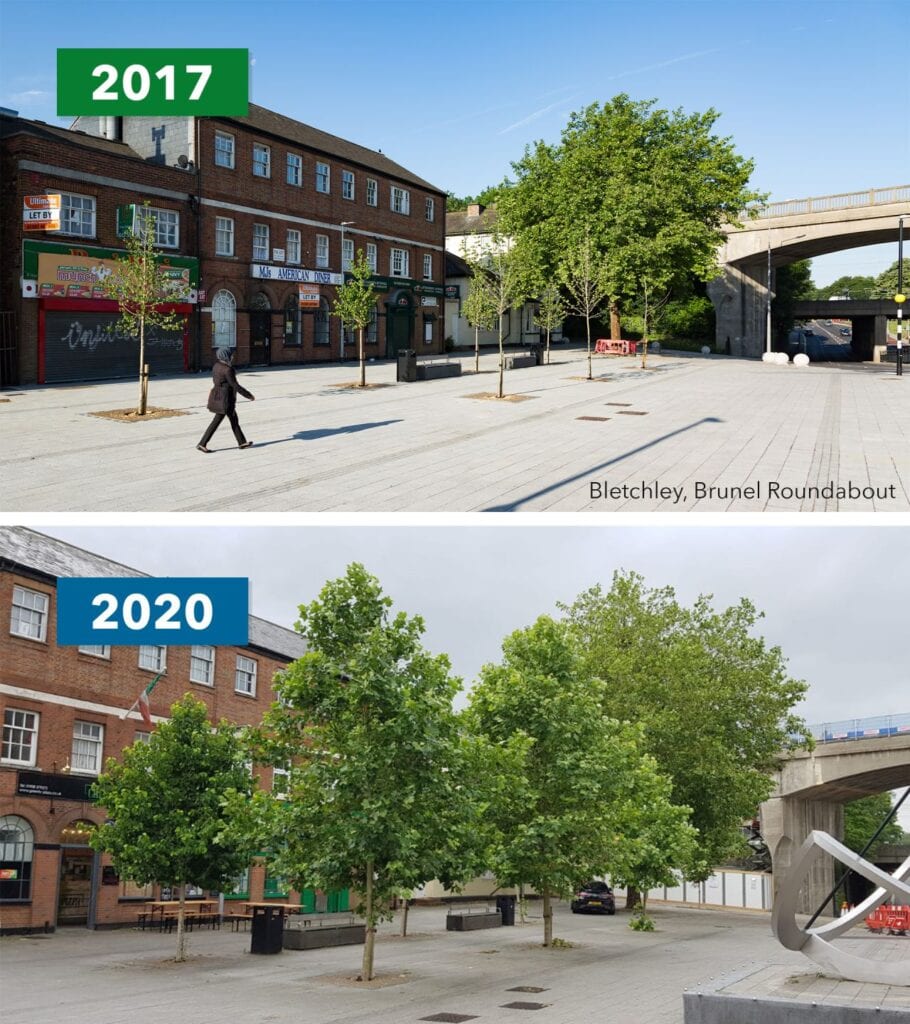
Legally, developers must work closely with local authorities to meet the strict conditions to protect people and property from flooding set out in the UK’s National Planning Policy Framework (NPPF). from flooding. The policy clearly sets out that unless these conditions are met, new developments should not be allowed. Significantly, many new developments are built on flood plains that have historically been set aside to alleviate of flooding – storing up potential trouble for the future.
Incorporating Sustainable Drainage Systems (SuDS) into developments represent both a legal and an economic solution. By adopting what for many may be a radical way of thinking, developers can meet the current legislation in Wales and the requirements of England, Northern Ireland and Scotland.
Trees are the perfect resource for developers to incorporate into sustainable drainage schemes. In an earlier post, we talked about the limitations of a ‘pipe to pond’ approach to SuDS, where the pond could be disproportionate or take up valuable developable land. By intercepting runoff, trees – and the soil they grow intake up a lot of the strain. They significantly reduce the volume and velocity of water making its way through a SuDS treatment train, so any attenuation point at the end of the train can be smaller or take a different form from the typical pond or swale. All it takes is a bit of new thinking and planning.
Often overlooked is the importance of the growing medium in SuDS schemes. By incorporating trees and tree pits into a SuDS scheme, developers are also able to control the growing medium, which forms part of the engineered solution and plays a vital role in removing pollutants as well as controlling flow. Meeting the Quality and Quantity pillars of SuDS design.
The term Green Infrastructure (GI) has been coined to refer to this use of incorporating natural resources into an engineering solution and is promoted by local authorities’ planning departments. Sadly, as a report for the Nature Smart Cities project partnership by Imperial College in June 20, Getting More Green[2] found, often these requirements were seen as tokenistic and were overtaken by more pressing priorities. Many decision-makers, the report said, believed ‘grey’ solutions to be cheaper and were more confident about grey cost calculations.
That’s certainly something we recognised at GreenBlue Urban and is why we have worked with McCloy Consulting Limited and Innovyze to write the GreenBlue Urban Hydraulic Modelling Guidance – MicroDrainage and the sister publication covering the Causeway software – to be launched on the 5th February. Gives developers, designers and planners more confidence in the essential calculations that local planning authorities demand.
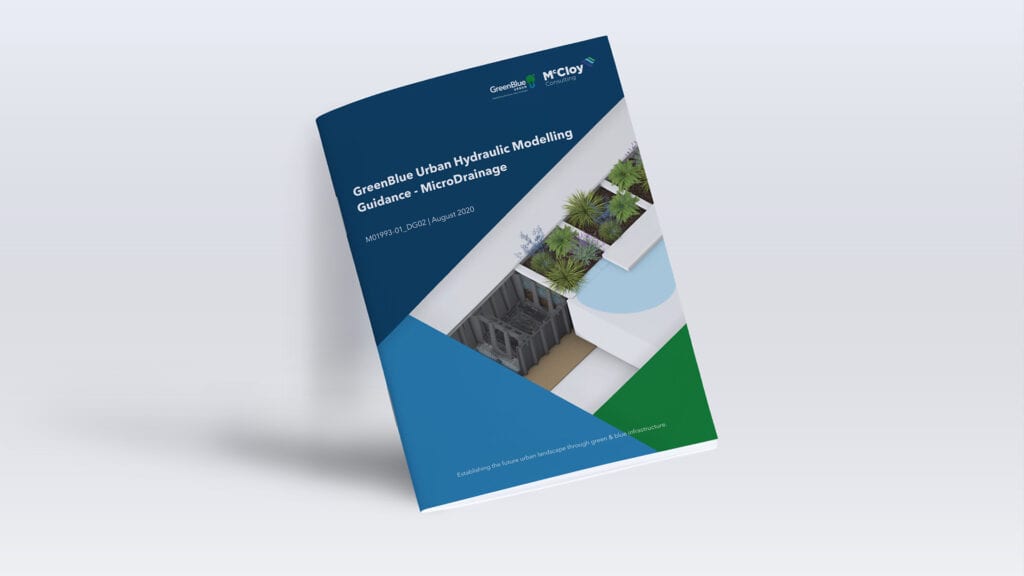
The guide shows how to represent our ArborFlow tree pit systems and HydroPlanter SuDS installations within the MicroDrainage hydraulic modelling software. As a result, trees, tree pits and green infrastructure solutions can be more accurately modelled to provide a more robust planning submission. Watch a webinar where Jessica Jeffreys, Drainage Design Product Manager at Innovyze, talks us through the main points of the guide, and the value of engineering with trees.
[1] “It’s more than just oil. It’s Liquid Engineering.” is the marketing tagline for Castrol, part of BP.
[2] Getting More Green. Smaller municipalities’ approaches to delivering green infrastructure. Phil Back and Alex Collins, Imperial College London June 2020.