Guest Post – Keith Sacre – Treeconomics
Following on from our recent blog from Kenton Roger’s What is an Urban Forest, Keith discusses our current theme Master planning & Strategy to implement canopy cover for the long term.
Urban trees are now widely recognised as essential urban infrastructure. The benefits that trees provide to people who live and work in towns and cities have been extensively reported. Many of these benefits can be valued and quantified, and many have yet to be fully identified and articulated. Politicians at both national and local levels have responded with promises of large tree-planting programmes, based on numbers or canopy cover goals.
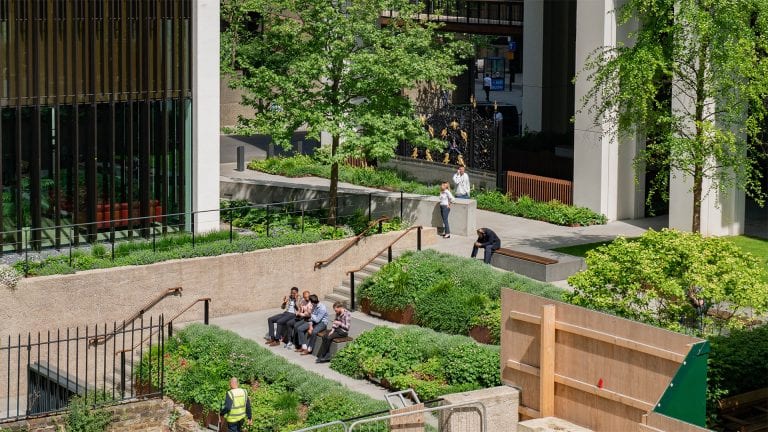
While such planting initiatives are to be welcomed, they are invariably spontaneous responses to a perceived need, with headlines in mind, rather than coherent, planned, and sustainable strategies focused on long-term urban forest development. The question must be asked, ‘What other features of the urban realm, identified as essential infrastructure, would be replenished in such a haphazard and knee-jerk fashion?’
The urban forest master plan outlines a vision for the development of the urban forest. It is place-specific and outlines the aspirations of all stakeholders who enjoy its benefits. It provides a long-term (20 years+) framework in which strategic plans, such as tree-planting programmes, can be developed. Tree-planting programmes are just one element of urban forest management but, as part of a long-term urban forest management plan, these can be focused, strategised and, most importantly of all, help with the achievement of a long-term vision: ‘Where do we want to be in 5, 10, 20 years?’
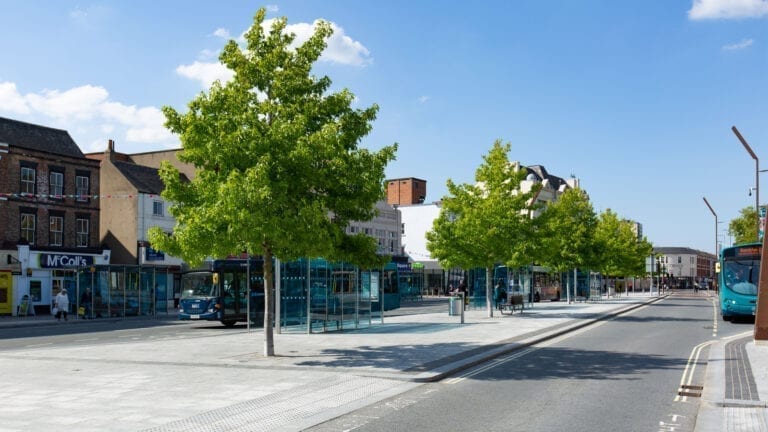
The urban forest master plan must be devised in consultation with all stakeholder groups, ranging from the business community to private householders; it will encompass all kinds of land, public or private. It must be recognised that a significant percentage of the urban forest is invariably on private land, which is why wider consultation is fundamental to the creation of a vision for the urban forest.
Once a vision is agreed upon, the master plan can be divided into management periods, with goals and targets for those periods clearly outlined. A series of indicators can then be put into place to monitor performance, and help progress towards the achievement of goals set for the management period and, ultimately, the bigger vision. It is important that progress is monitored and reviewed on a regular basis, and actions modified as necessary.
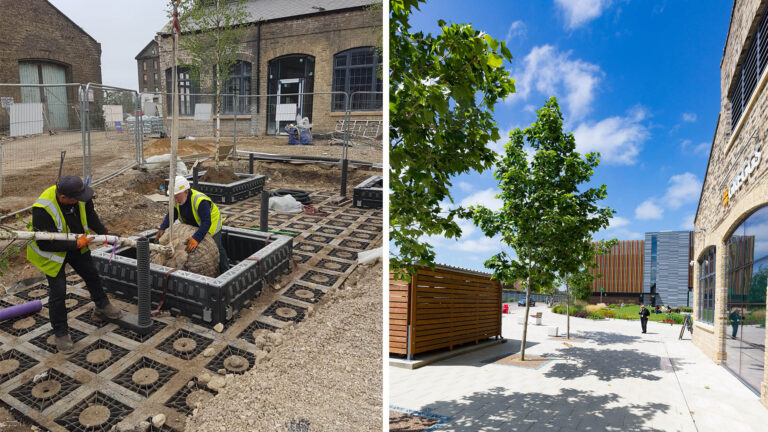
GreenBlue fully supports Keith’s comments having mirrored these in our recent blogs on planning for long term success. We work with key suppliers to provide an evidence base for urban tree planting including the fantastic work implemented by Treeconomincs. Having recently highlighted our ArborAdvance Warranty – you can guarantee long term success!
Watch out for our next webinar on 30th April:- Legacy or Liability – Trees in the urban realm, discussing perceived constraints and how to overcome these!