Ethos: the characteristic spirit of a culture, era, or community as manifested in its attitudes and aspirations.
Every company has its own culture or ethos under which it operates, and for good or for bad it affects every element of the business. Most businesses have a desired ethos, and many operate at that level, but what about those who fall below the mark? And how does a business display its ethos to the outside world?
The majority of us understand the need for Corporate Social Responsibility; where businesses self regulates themselves and aims to contribute to societal or environmental gains within communities that they affect and on which they depend. And this is a great Public Relations business, but what about the actual products and services – could they reflect ethos themselves?
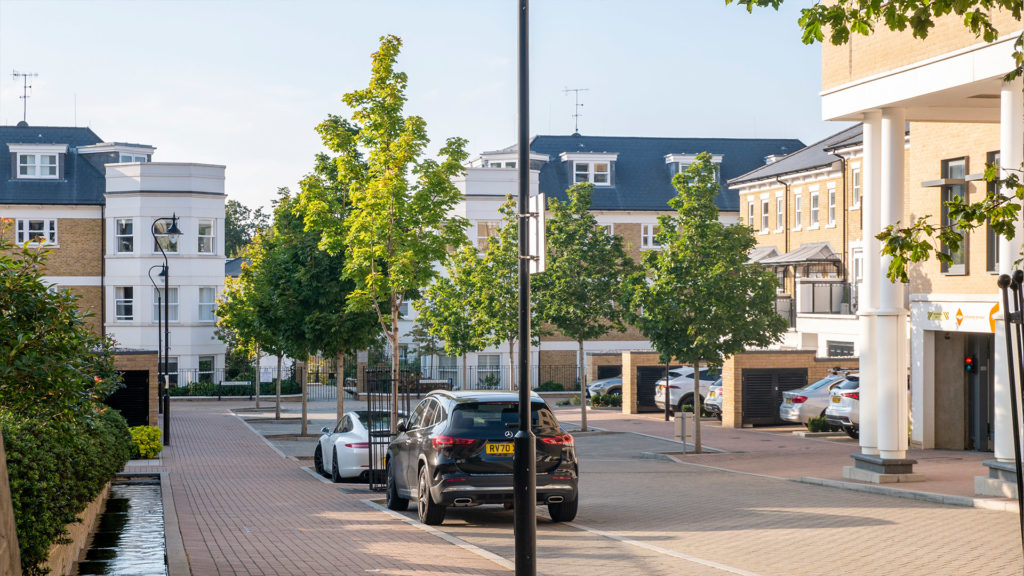
In the world of property development, there is a massive spectrum of companies from the small builder to some huge organisations, all helping to build back better. We are seeing new houses with manifestly better specifications than those built a generation ago, and the quality of the fit-outs has improved from the troublesome days of the 1980s. Many developers produce glossy brochures, stating their aims for the development, and inspiring purchasers to buy and live this great life advertised.
But we still see quality landscaping viewed as a “nice to have” rather than a core essential. It is an element that has a direct impact on human health and well-being, can help create a sense of community, bring bio-diversity and many other benefits, but only if it is finished to a decent standard. Poor landscaping actually can be a dis-benefit – it can reduce the property value.
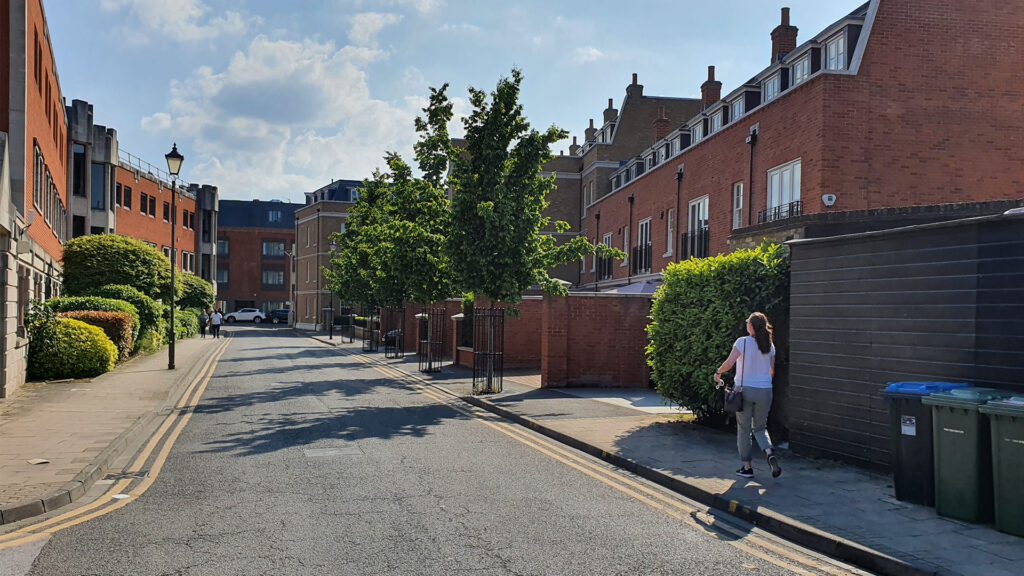
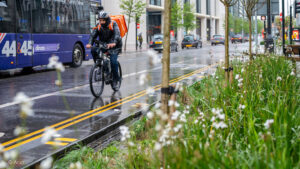
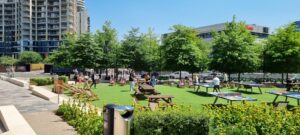
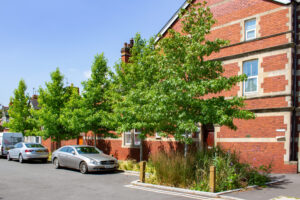
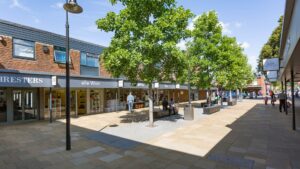
At GreenBlue Urban, we put green infrastructure at the heart of everything we do, and for the long term. The definition of ethos that we started with includes the idea of aspirations, and we believe that this is an area in which developers could better reflect their ethos. Whilst in a commercial world we understand that profits are essential, could there be a longer term outlook, including higher aspirations for residents and property owners? Some companies are extremely good at this, and we see truly transformational places incorporating the ArborSystem to enable long term canopy growth which is a joy to be involved in.
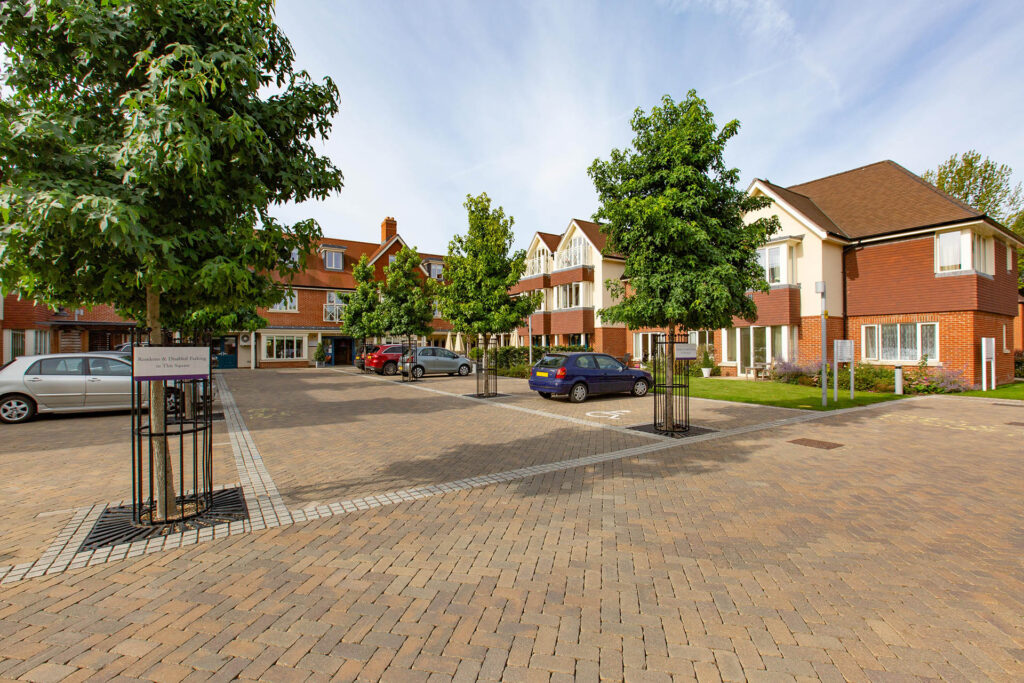
These exemplar schemes provide both public and private landscapes in which the designers have clearly been authorised to think outside of the short term profit box, and have created spaces of wonder. These spaces have not been created by cost-cutting or the cheapest contractor, but by careful planning, proper preparation, the selection of quality materials and an attitude where consideration for the residents long term enjoyment is taken into account.
Just remember that the show home may display a quality culture, but a healthy green development will prove it!