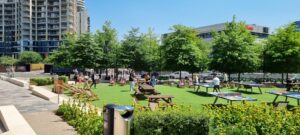
Early in the development process comes the allocation of land for buildings, paving, open space and drainage requirements – usually this allocation is reflected in the value of the land. The land is a diminishing resource, and to make profits, developers have to allocate land in the most effective way. For generations, the percentage of land to open space has been more or less the same – property densities as high as reasonably possible to make developments viable.
However, the SuDS requirement has thrown a new challenge into the melting pot: allowing enough room to treat and store surface water on site rather than throw it into the pipework and away into the drainage network means that the tried and tested allocation ratio has to change.
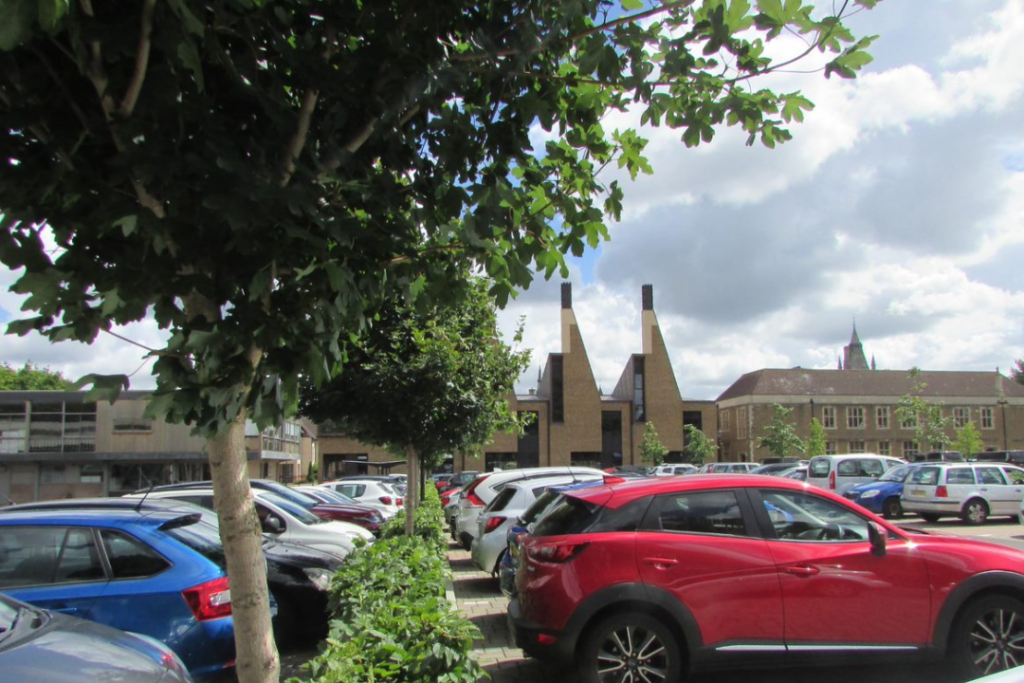
But by how much?
This is not simple to answer, except to say, by enough. Calculations must be made to ensure that the total rainfall volume for the design storm event can be retained on-site for the design period. This period would usually be specified by the Lead Local Flood Authority (LLFA) as being the time required to allow a storm event to pass through the drainage network so that it does not become inundated by stormwater. But this could be as much as 24 hours, so the volume of storage is not insignificant.
We also have to consider the health and safety aspect of the retention feature; both for general use and for maintenance. It is not usually acceptable to create a deep storage pond, unless no other option is available, as this poses a risk for users and maintainers of the space. Most commonly, a shallow basin is preferred, if possible dry through much of the year, and only full in exceptional rain events.
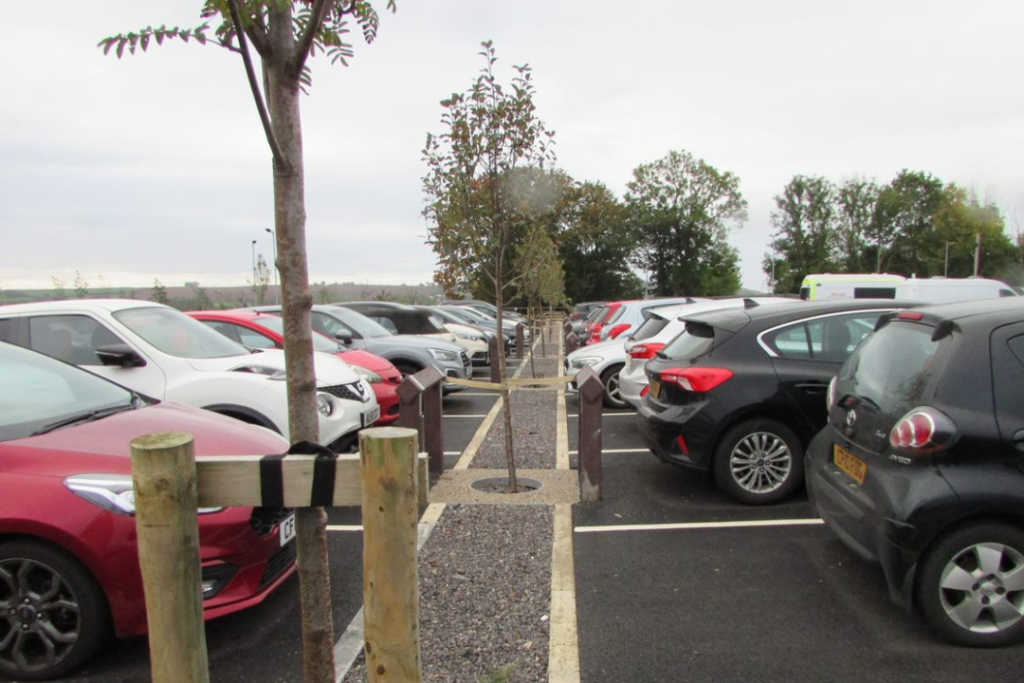
But how much land has to be set aside for this?
A rule of thumb is that there should be a maximum ratio of 10:1 between impermeable to the base of water storage areas close to buildings and that the maximum depth of stored water should be no more than 300mm. However, this is a guide only and based on open SuDS features such as attenuation basins or swales. Similar calculations are available for alternative features.
Most Lead Local Flood Authorities have helpful guidance for reference. For example, one LLFA recommends that 12-15% of the total land area be allocated for open storage. This level of land allocation means that it can be challenging to provide suitable private garden space as well as roads, footways and other public spaces.
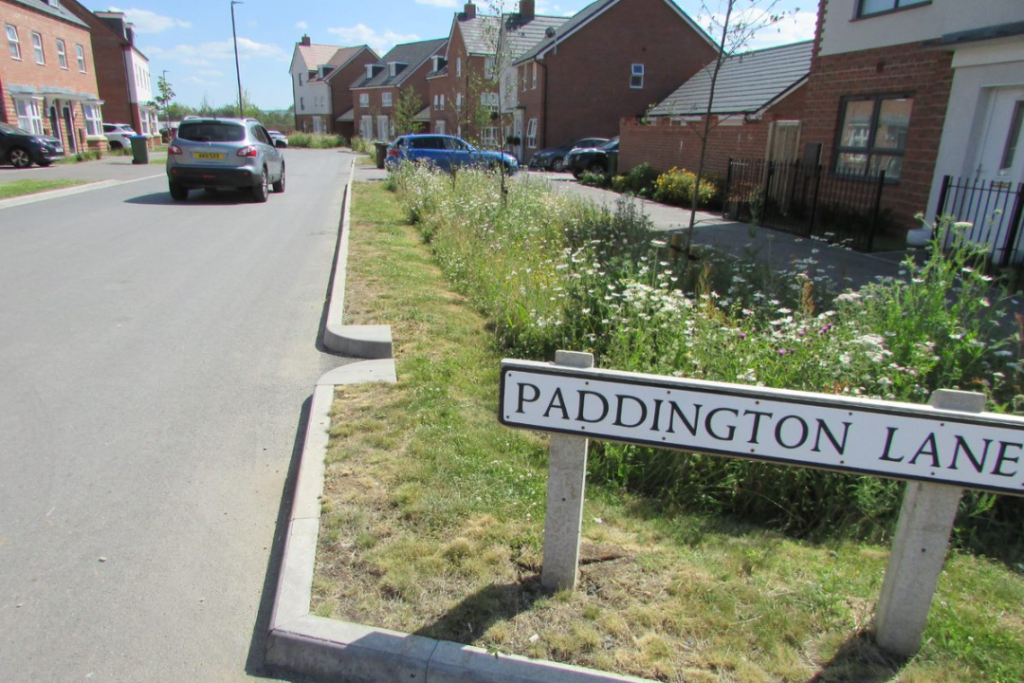
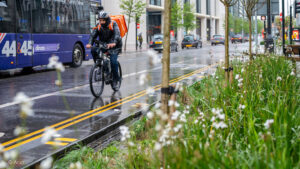
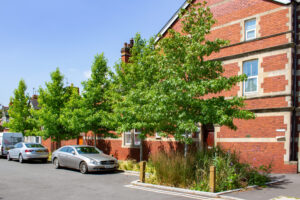
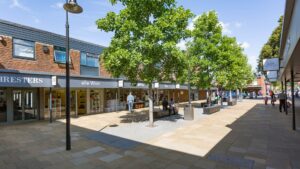
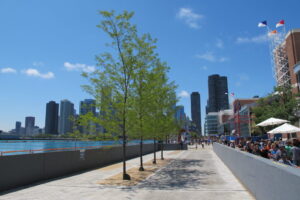
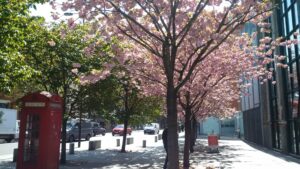
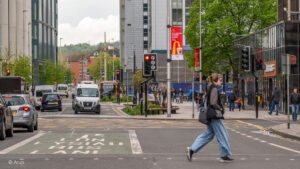
An alternative way which minimises land take is to use multipurpose SuDS features such as the GreenBlue Urban Arborflow tree pit systems. Whilst these systems may hold relatively less water by volume than an open basin, they can be integrated into a street scene without losing land. Often new developments have minimum set canopy cover targets, so by using trees as part of a SuDs train we can achieve two of the targets within the same footprint.
Raingardens such as the HydroPlanter range from GreenBlue Urban are a valuable resource, as discharge performance can be accurately predicted to achieve LLFA compliance. GreenBlue Urban have invested heavily in soil science and is one of the few companies in the UK to be able to recommend the correct soil mix for the catchment area and rainfall event being designed for. Speak to one of our technical consultants today for advice on the best way to design your SuDS feature and to minimise your land take on your development. GreenBlue Urban – designing healthy urban spaces in harmony with nature, and making developments not only sustainable but financially viable.