Biodiversity net gain: three words that might strike terror into the heart of someone who wishes to build on their land. What is it, and how can I comply with upcoming legislation?
The BNG legislation included within the Environment Act 2021 is simply a requirement to increase measurable biodiversity on a designated parcel of land by a minimum of 10% according to a habitat-based metric set out by DEFRA. In practice, this means that a survey has to be taken off the land prior to development, and habitat for flora or fauna recorded and the plans for development must include measures to enhance this habitat by a minimum of 10% and maintain that level of biodiversity for a minimum of 30 years. The Environment Act was passed into law in November 2021, with a 2-year phasing-in period, becoming law in November 2023. However, many local planning authorities have already adopted this in their own local planning guidance, so BNG is already being implemented across the UK.
Sounds simple? Unfortunately, it is not as simple as it sounds. The Government intended this legislation to enhance green space and biodiversity in all developments for the benefit of those who live, work and play in them, by making developers consider carefully how intelligent site layout can do this without losing property density and therefore profits.
However, with land suitable for development being at an all-time high, it is critical to maximising the building space on any parcel of land, and green space can be seen as a hurdle to development. To overcome this, the Government suggested that if it was not possible to enhance the biodiversity on site, this could be done off-site, on a nearby plot of land, or in exceptional cases, BNG credits could be paid to a Government organisation that would then use it to create biodiversity elsewhere in the UK. But this option has potential loopholes which could lead to inconsistent planning situations.
The first potential problem is that there seems little to stop a developer from purchasing a poor piece of farmland and planting this up as offsite BNG, costing him relatively little, and achieving the necessary BNG metrics. To combat this, the Government has stipulated that any land is to be managed for 30 years, as above, and is the responsibility of the developer to ensure that it is maintained. There is no given maximum or minimum size of land that is deemed to be suitable for offsite BNG provision, but the size may determine the viability of using it.
The BNG credit purchase arrangement prices are intended to be a disincentive for using them, except in areas where nothing else can be found. With anticipated costs of between £11,000 and over £40,000 per credit, these credits are an opportunity for local authorities to earn extra revenue., and provide long-term habitat local to development areas.
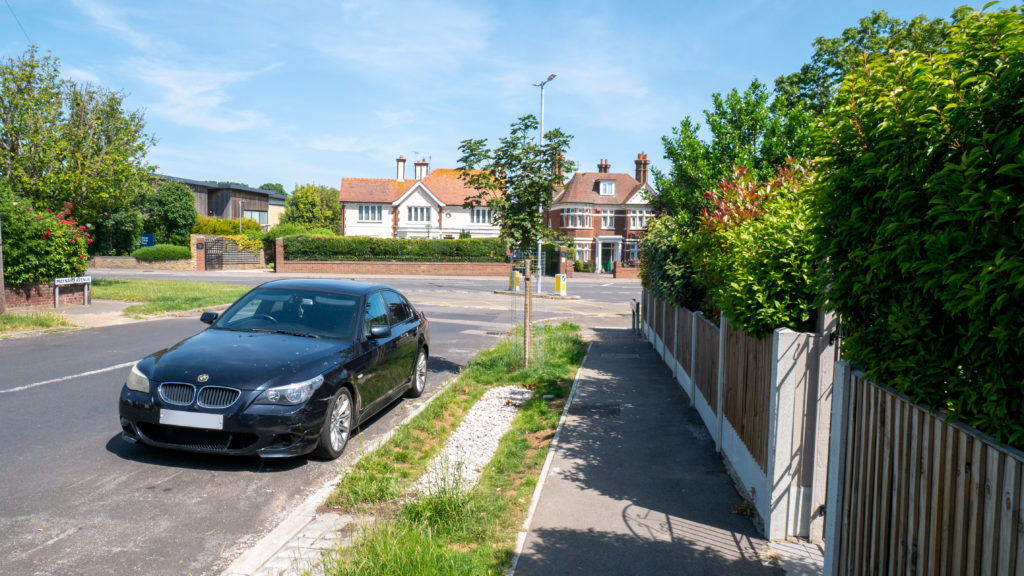
GreenBlue Urban is following this legislation carefully. It is advantageous for a developer to engage an ecologist and landscape architect early in the design process to mitigate against habitat loss in the first place but maximise potential habitat gain post-construction. It is an interesting facet of the scheme that ground cover, such as grasses or low-level planting can be included as well as the trees above them – this getting additional credits for the same land. In addition, SuDS features have a metric value, so incorporating these features with street trees seems to be a no-brainer, creating places for people in harmony with nature, but also meeting the new BNG requirements.
Solutions such as the GreenBlue Urban ArborSystem for planting trees in hard areas, Verdecade for climbing green walls, ArborFlow, and HydroPlanter SuDS solutions all provide developers with options for incorporating BNG into tight sites, with minimal cost and little land take. Please contact one of our technical team to help you with your BNG Metric calculation mitigation; we will be glad to help.