By Kieron Doick
To appreciate the total contribution of an urban forest (defined as all the trees in the urban realm) to the livability of a city, we need a city-wide tree survey, right? Well, partially. It’s true that one cannot beat a full inventory appraisal or, alternatively, a statistically representative survey – via an i-Tree Eco survey, for example. Yet percentage urban tree canopy cover (UTC) can also provide a reasonable estimation of benefit provision. Perhaps even more usefully, an assessment conducted at a meaningful geographic scale can present a picture of equitable or inequitable provision especially when overlain with maps of population density or social deprivation.

So what is the current level of canopy cover provision?
Canopy assessments are now extremely accessible via the free-to-use i-Tree tool. It’s quick too. Following a tour of the tutorial, one can set up an assessment and complete a simple survey in approximately one hour. Indeed, it was exactly this approach that has been used to collect data on hundreds of cities around the world. In 2016, figures for 291 UK towns and cities were presented at the 2017 ICF Conference1. The study showed that – in England – 41 (14%) had less than 10% UTC and only 8 (3%) had over 30%. The vast majority – 178 or 63% – had between 10 and 20% cover. In Scotland, UTC ranged from 10 to 22%. And while only Cardiff (at 21%) was included for Wales, actually the Welsh showed to be leading the UK in UTC assessment, having reported on all their urban areas in both 2006 and 20132.
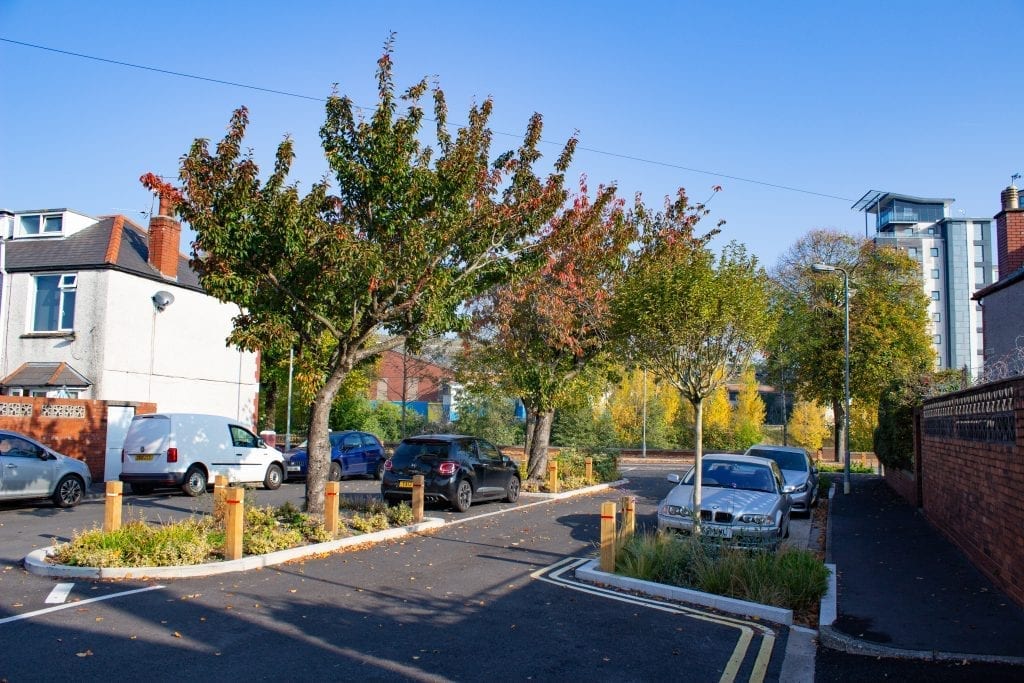
What is the correct level of canopy provision?
Scientifically speaking, we cannot yet state an optimal UTC. In the US, 40% used to be the target for all cities. Today, this has been dropped in preference for a local target derived from area-specific assessment of provision and aspiration. However, across the world, targets of 30, 40 and even 50% are documented1. The Urban Forestry and Woodland Advisory Committee Network (UFWACN) and other related associations, took the TPBEIII paper data and compared it with population and deprivation indices to recommend that a “minimum standard for tree canopy cover is set for a local area” and that “20% is a good aspiration”3. With the majority of people living in urban areas and less than 20% UTC is most cities, setting and attaining such a target would bring substantial benefit.
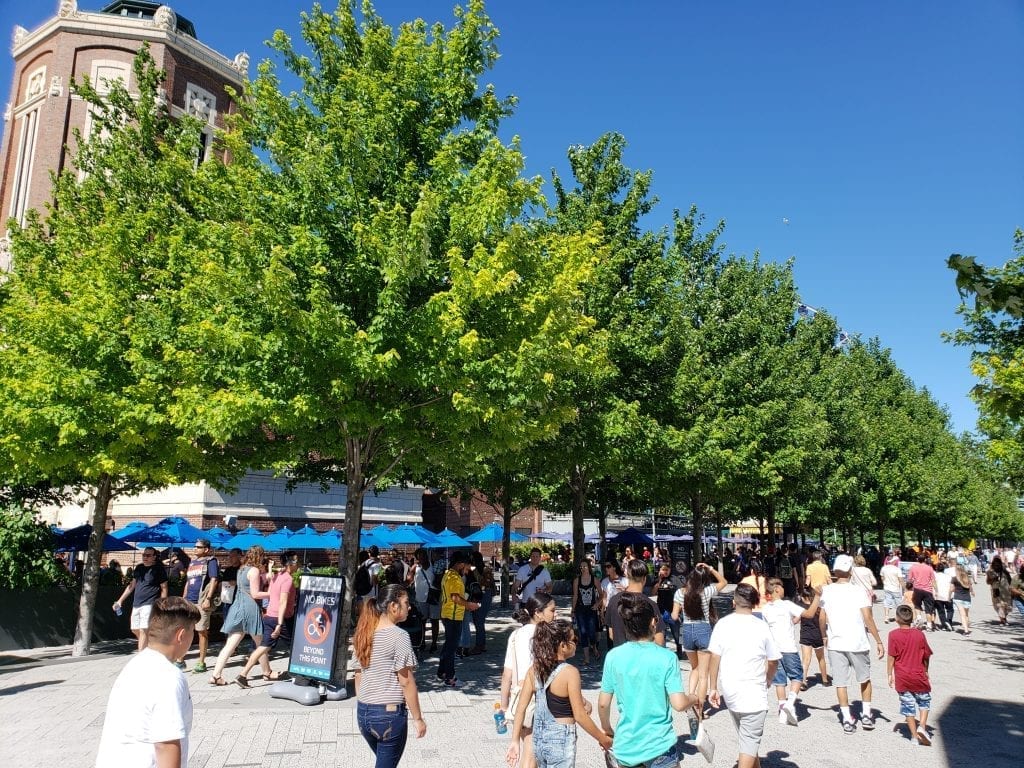
Progress to 20% Urban Tree Cover
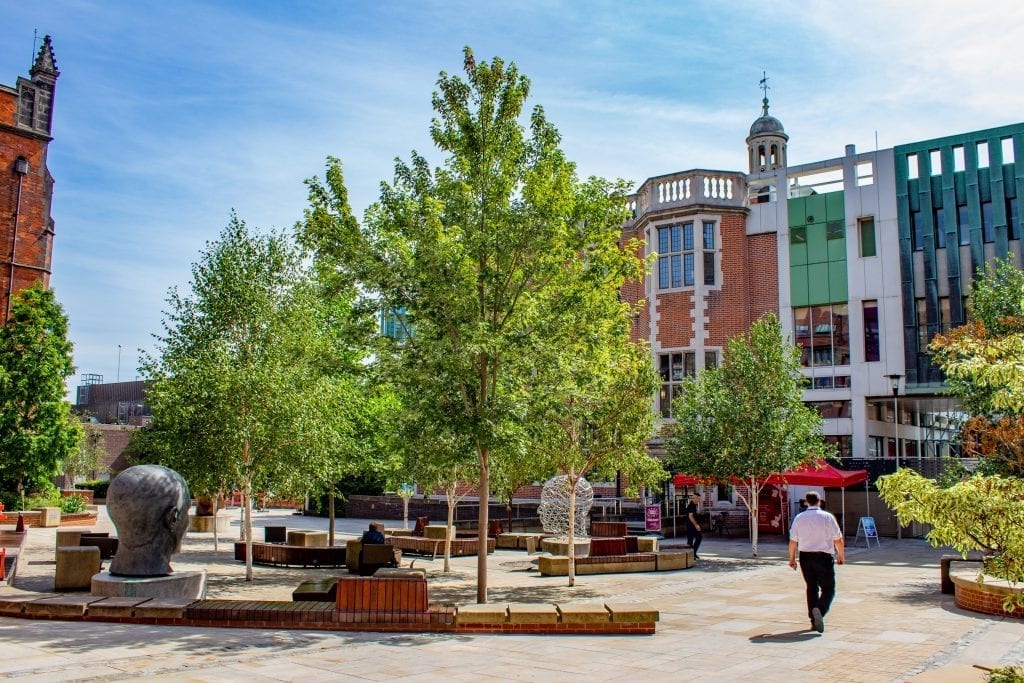
At the 2007 AA Conference, Jeremy Barrell raised an alarm: UTC is decreasing. ‘Trees in Towns II’, published in 2008, alluded to the same trend4 , and the 2016 NRW study ‘Tree Cover in Towns and Cities’ affirmed such losses. The truth is that empirical evidence for UTC change does not exist in most countries5 and even once it is available – and irrespective of what that trend might be shown to be –the figures above reveal that the majority is already below a 20% minimum UTC standard. The need already exists, therefore, to create and deliver strategies for increasing UTC. Today, we enjoy the fruits of our ancestors’ work – the Victorian fashion for tree-lined boulevards for example – could we be doing more to preserve their legacy and create a legacy of our own?
1 Doick, K.J., Davies, H.J., Moss, J., Coventry, R., Handley, P., Vaz Monteiro, M., Rogers, K., Simpkin, P. (2017). The Canopy Cover of England’s Towns and Cities: baselining and setting targets to improve human health and well-being. Conference Proceedings of TPBEIII. Urban Trees Research Conference. 5-6th April 2017. Institute of Chartered Foresters, Edinburgh.
2 NRW. (2016). Tree Cover in Wales’ Towns and Cities: Understanding canopy cover to better plan and manage our urban trees. NRW, Aberystwyth, Wales. 145pp.
3 https://www.forestresearch.gov.uk/tools-and-resources/tree-canopy-cover-leaflet/ https://www.forestresearch.gov.uk/documents/2109/FR_FC_TreeCanopyData_leaflet.pdf
4 Britt, C. and Johnston, M. (2008). Trees in Towns II: A new survey of urban trees in England and their condition and management. Research for Amenity Trees No. 9. DCLG, London.
5 Even though it is needed to guide equitable delivery of urban tree benefits, to set UTC targets, and to monitor progress towards them.
Kieron is a Science Group Leader, Head of Urban Research conducting studies on urban green space and land generation for Forest Research, working alongside external partners to advise on regeneration schemes.
Follow Kieron on Twitter here.