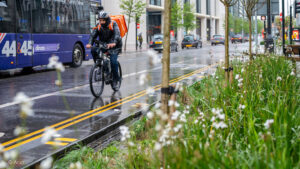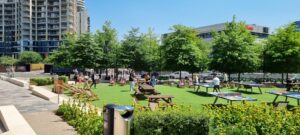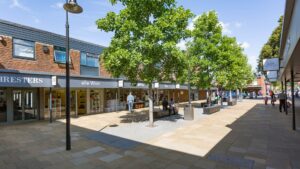
One question that is on many minds is “what will our towns and cities look like in the future”? Well, nobody knows, but one thing is sure – it’s going to be different from what we have been used to. There seems to be little doubt that pedestrians and cyclists will have higher priority than they have for the past one hundred years or so, and that issues such as air quality and the heat island effect of our concrete jungles will remain high on the agenda.
 The multiple problems that our urban zones face with rising population numbers, pressure on our infrastructure systems and climate change (amongst other issues) requires us all to rethink what we can do to change our own neighbourhoods. Major schemes take time but don’t lose heart, incremental small interventions add up and can make a massive overall difference to everyone living, working and playing in those areas.
So, what is the ideal intervention? This depends on what you are looking to achieve, but most local authorities or municipalities have policies outlining their priorities. As a general rule, authorities are looking to implement sustainable drainage systems, pollution-free travel, reduction of temperatures in urban areas, improved air quality and other environmental interventions which will improve the quality of life for residents. There are myriad different ways of achieving these desirable goals, but until now, no one solution.
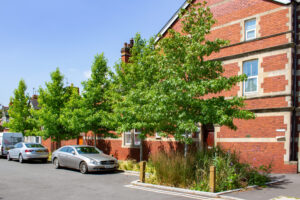
 Meet the GreenBlue Urban ArborSystem with Arborflow and ArborCharge. The new package ticks all the boxes, and what is so unique is that the tree that is central to the whole GreenBlue Urban ethos is guaranteed to grow to species potential size and age, continuing year after year to bring the huge benefits that only a healthy tree can provide. The Arborflow module attenuates and cleanses stormwater, reducing pressure on the limited drainage networks, and irrigating and feeding the tree.
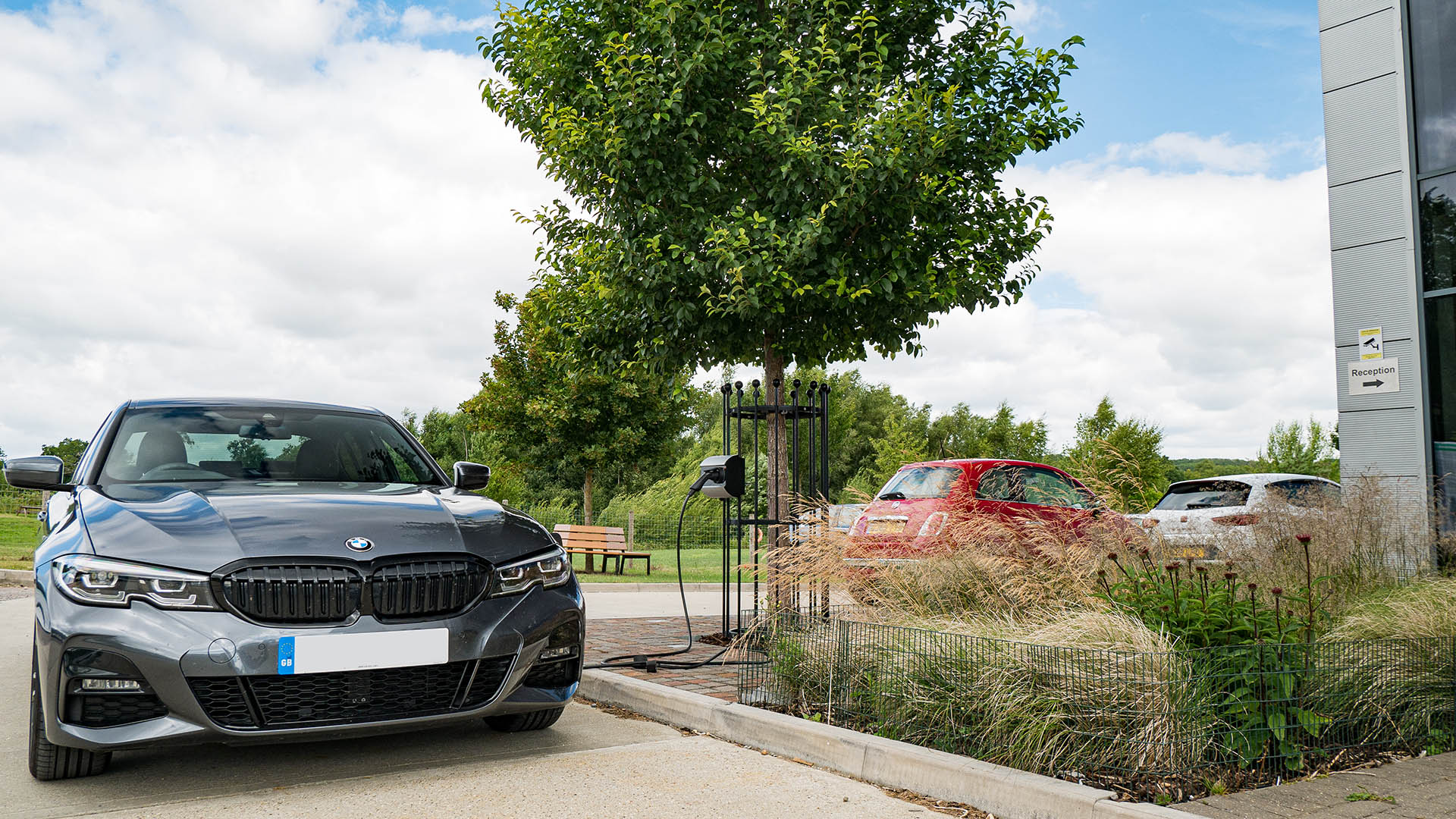
The new ArborCharge option adds the ability to include electric car charging – a no brainer! Whilst excavating the tree pit, identifying and jointing into an electrical supply to supply the charging units is a small job and could be covered by Government grants to help pay for more car charging points. Often this excavation would be a major part of car charging point installation costs, and the UK Government offer grants of up to £7500 per point. GreenBlue Urban works with a number of car charging point manufacturers – please call our technical team for more details. Electric vehicle owners normally prefer to park their vehicles underneath tree canopies as this protects vehicles from the sun, and high interior temperatures, thus encouraging low pollution vehicle take-up.
Finally, trees bring so many advantages to humanity; as we begin to adapt to the changes in our global climates we need to make the small steps fast, to bring the big changes soon.