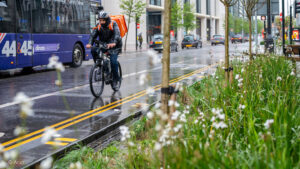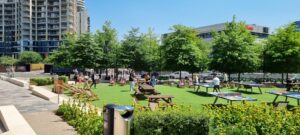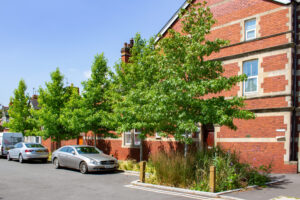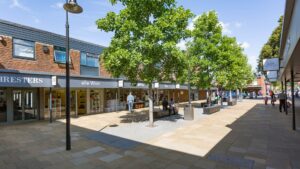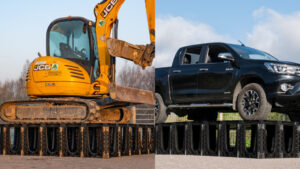
It was a pleasure to hold our latest Roadshow in the iconic grounds of the existing BBC TV at London’s White City, the fifth in our series in 2019. Held at the “Cool” White City House the event focused on Biodiversity, SUDs and the Highway. We all know the impact our transport infrastructure on the natural environment has to be accounted for if we are to mitigate against the impending climate crisis. It was with this in mind that we brought together experts from across the public and private sector to present a unique set of short talks around highways.
 Julia Baker, Balfour Beatty, impressed upon us the necessity of using the new Biodiversity Net Gain metric that will soon become mandatory across a range of development contexts. She emphasised the need not only to offset, but to go for gain, to leave sites better than they were in the first instance.
She explained that net gain, or lack of, does impact on the bottom lines of big business in so many ways and now the cost of not doing more far outweighs the laissez faire attitudes we continue to see. Highways verges are a huge asset and Julia took participants through the tree planting scheme on the A21, a stone’s throw from GBU HQ! Discover more on the Good Practice Principles for Biodiversity Net Gain
Ian Hawthorn, who spearheaded a number of highways retrofit projects in his capacity at London Borough of Hammersmith and Fulham, focused on stakeholder engagement and community. We are no longer able to conceptualise streets as mere pathways for traffic to get from A to B, characterised by conventional drainage solutions. They are an opportunity for community benefit and placemaking. It is with this in mind that Ian trains his engineers to think green before grey, to ascertain just how far they can push the boundaries and experiment with green engineering solutions to deliver value to residents every step of the way.
Kevin Barton from Robert Bray Associates spoke about the need to link biodiversity with SUDs on a multitude of levels, to consider the role biodiverse features in and around the highway can remove pollutants and microplastics and to deal with the intensity of rainfall. Recharging ground water and slowing the flow in urban catchments was also a key part of his presentation.
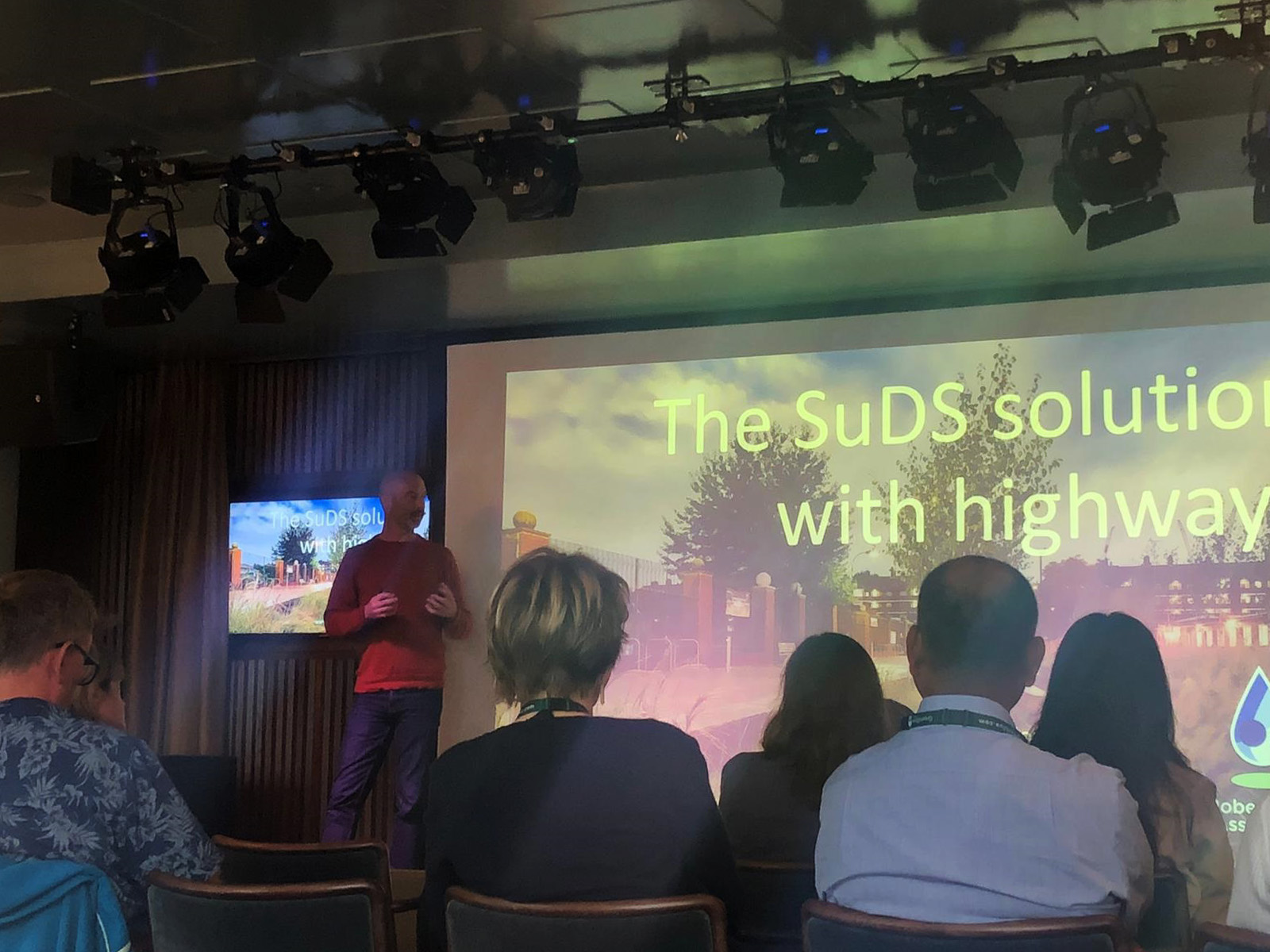
David McKenna from the Landscape Institute provided a variety of case studies illustrating the need to truly appraise what we mean by SUDs and biodiversity and examples where developers haven’t approached the masterplan with the creativity and joined up thinking required to make a successful scheme. Again, we must all remember CIRIA’s four pillars of SUDs – Amenity, Biodiversity, Quality and Quantity.
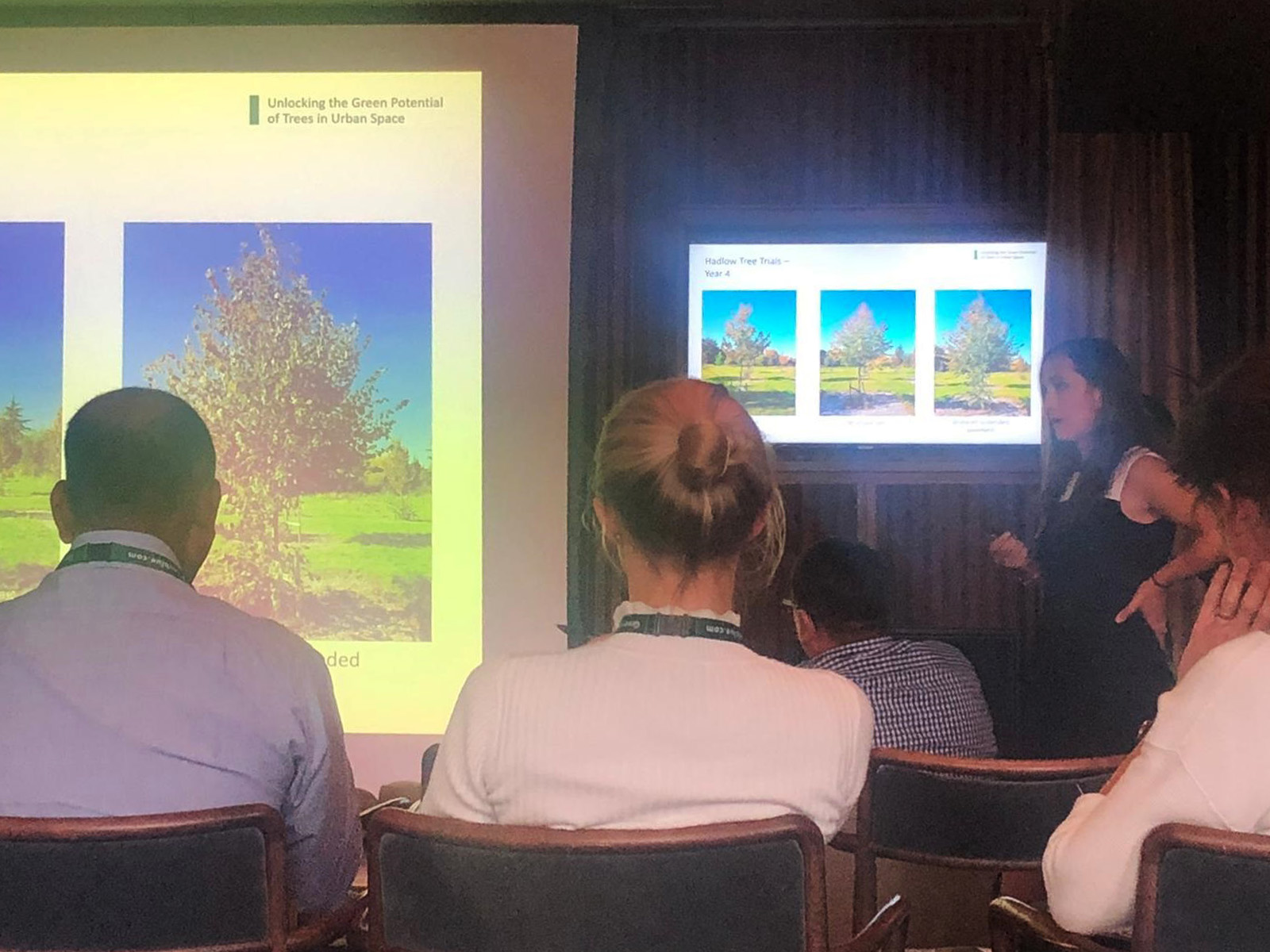
Charlotte Markey from GreenBlue Urban focused on the challenges and opportunities of retrofitting in and around the highway, emphasising the need for multifunctional components to deliver net gain in condensed urban environments. The use of multifunctional SUDs tree pit systems that can be integrated with biodiverse raingarden planting above the geocelluar attenuation/root management approach below ground provides an ideal solution across a variety of projects.
The day culminated and concluded with a tour lead by GreenBlue’s CEO Dean Bowie to our BBC and White City tree planting project’s where he was able to show the application of the tree pit design principles Charlotte had presented.
 We are pleased to include a link to all Powerpoints from our wonderful speakers, please feel free to view here!