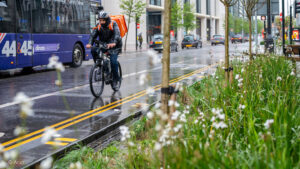
Raingardens have been gaining a much higher profile, lately. They’re not just talked about by local authorities, water companies and professionals working in relevant fields, but by the public, too, and especially by gardeners and garden designers. This sustainable method of stormwater management is now reaching a tipping point, where the driving factors for installation are as much about consumer interest in eco-friendly and aesthetic solutions to flood mitigation as they are about the big-picture plans of those responsible for urban and suburban infrastructure.
The first raingarden seen at the Chelsea Flower Show was designed by Nigel Dunnett, working with the Landscape Agency, all the way back in 2011 – but it’s taken until 2024 for the concept to be more widely seen at the Show. This past summer, the Royal Horticultural Society identified raingardens as a gardening trend, with several award-winning Chelsea gardens incorporating the principle in their design: the National Autistic Society, Water Aid and Flood Re all showcased spaces which were designed to help increase floodwater resilience while also providing beautiful outdoor areas for people to enjoy.
But of course, Chelsea showcases the art of the horticulturally possible; while inspirational, the concepts are likely to need some revision in order to be successfully translated into real-world stormwater management installations with real-world commercial considerations.
Even without the prestige of a Chelsea plot, raingardens are a visually appealing, not to mention effective, solution for managing stormwater.
Stormwater management without aesthetic compromise
Designed to mimic natural water cycles, raingardens are filled with native plants chosen for their suitability for local climates, which means they require minimal maintenance in order to stay looking their best; aside from the beneficial cost implications, people want to be in green spaces that look lush and healthy, so ease of maintenance is a significant consideration when designing to improve community wellbeing as well as for practical considerations around flood mitigation. Native species also provide the right habitat for local wildlife, thus supporting biodiversity. The installation of gardens built to this principle also combats the urban heat island effect, by adding greenery which lowers temperatures through shade and evapotranspiration, as well as improving air quality.
Unlike traditional landscaping, raingardens are engineered to support infiltration and evapotranspiration, which reduces the volume and speed of stormwater runoff before it makes its way into the sewer system. The more conventional approach taken previously in urban areas, featuring impervious surfaces such as concrete and tarmac, prevents rainwater from soaking into the ground, leading to increased runoff and problems with sewer capacity during a storm event. This runoff often carries pollutants such as oil, fertilizers and debris into nearby water bodies, degrading water quality and habitats. In contrast, raingardens act as filters, capturing sediment and pollutants, while promoting groundwater recharge.
Raingardens: a proven solution for stormwater management
We have worked on numerous projects where either impermeable paving has been replaced by raingarden installations, or new-build developments have incorporated raingarden elements in order to future-proof the urban environment for their communities, including:
- Fleet Valley Pocket Park, Camden: A full SuDS feature in a critical drainage area, designed to alleviate pressure on the nearby combined sewer and create a green oasis in a built-up area (read the full case study here)
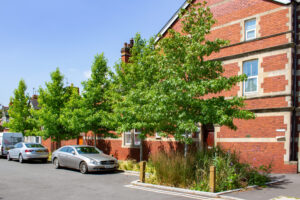
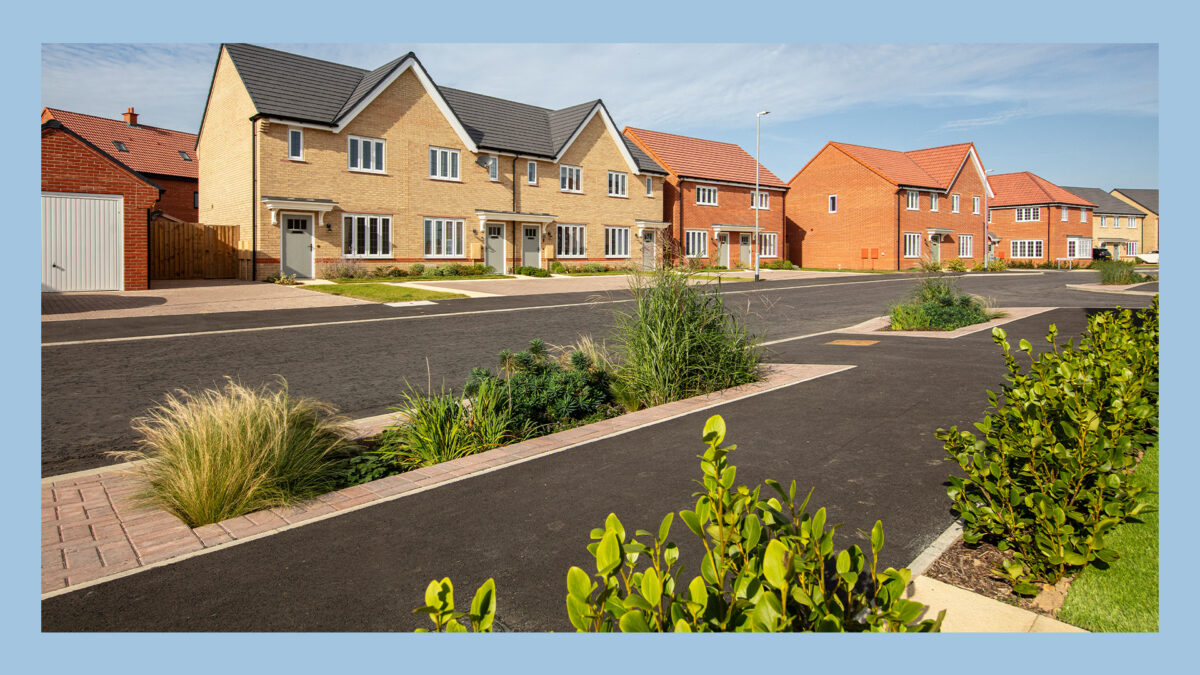
- Bloor Homes, Felixstowe: In keeping with the other sustainability credentials designed in to this development, raingarden planters were installed as an alternative to traditional swales, ponds and tanks (read the full case study here)
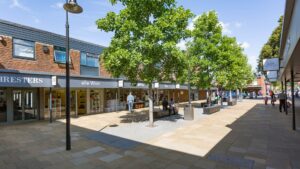
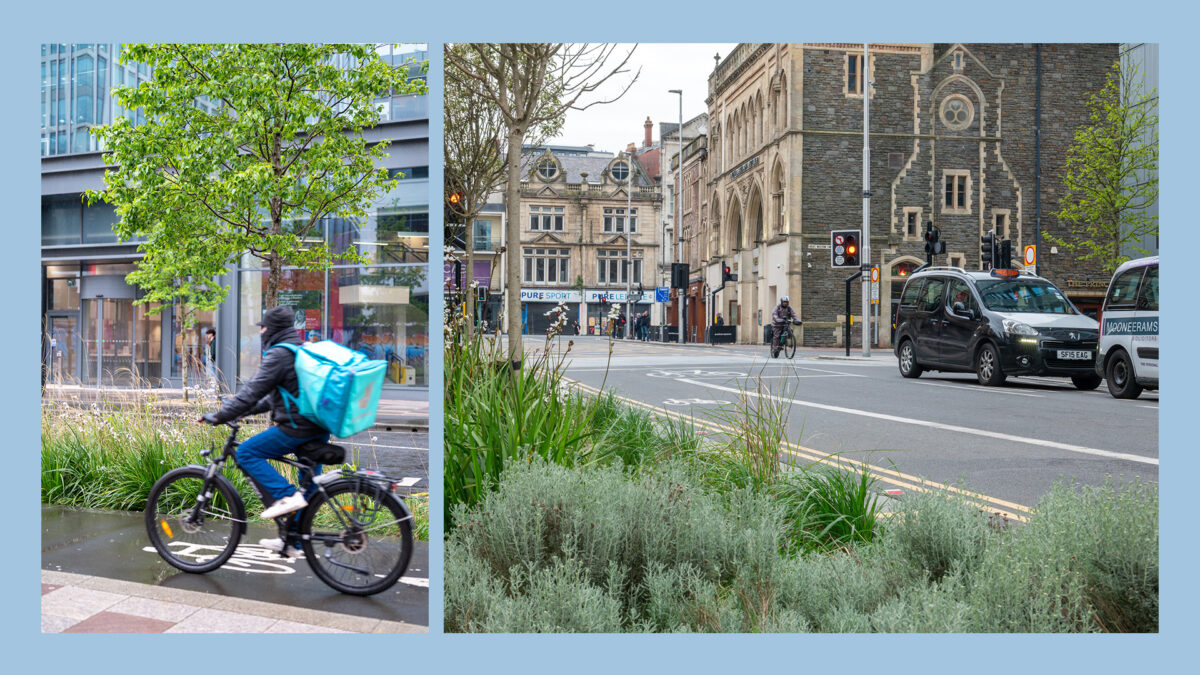
- Wood Street, Cardiff: A radical plan to reimagine the city centre led to an innovative proposal, designed to reduce runoff volumes draining into the sewers and reduce the heat island effect in summer (read the full case study here)
Design considerations for raingardens
When designing a raingarden, there are some basic considerations to follow:
Location: Select a spot that naturally collects runoff, such as a low-lying area near a downpipe or the base of a slope.
Size: The garden size depends on the catchment area—the surface from which rainwater will flow into the garden.
Soil type: Ensure the soil allows water to infiltrate. If the soil is clay-heavy, improve it with sand or compost.
Plant selection: Use native plants that tolerate both wet and dry conditions. These will thrive with minimal care and support local biodiversity.
The specification of the right raingarden products will also help to ensure the best reduction in peak runoff flows, and the highest pollution removal levels, as well as enabling the quickest and most straightforward installation process.
Features to look for include modular construction with scalable and flexible configuration options, an exceedance chamber that allows for inspection and maintenance as well as overflow, and light, convenient solutions that are quick and easy for contractors to install without machine handling. Stackable systems make for economic freight, while it is fitting that sustainability-relevant products are made from recycled materials and manufactured in the UK, to reduce carbon emissions associated with delivery.
Designing and installing raingarden solutions
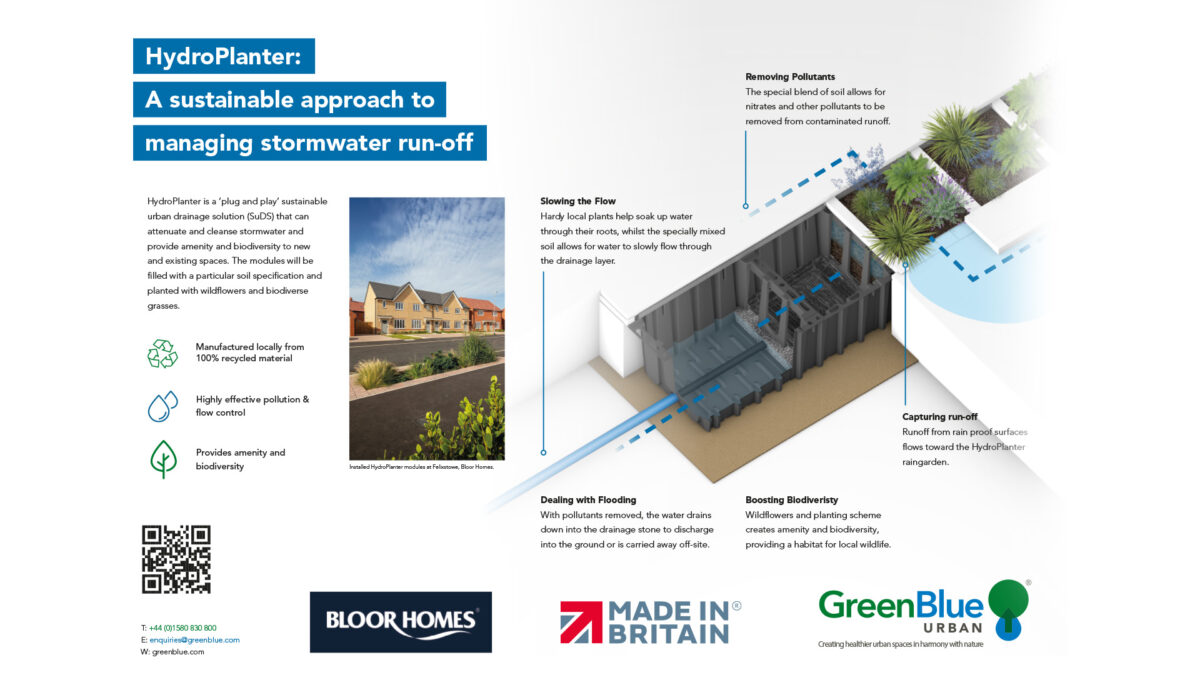
A critical part of designing a raingarden is calculating its hydraulic performance to ensure it can handle the runoff from the catchment area. This is considerably more straightforward when using engineered raingarden systems such as our HydroPlanter and HydroPlanter Flex solutions, which not only offer ease of specification thanks to dependable hydraulic performance data being available, but ease of installation as well. Additonally, the HydroPlanter Flex offers the simplicity of being an off-the-shelf, plug-and-play modular system.
We offer significant support on the design and specification requirements for raingardens, across a wide range of types and scales of projects, so for tailored advice and information do speak to one of our friendly team by calling 01580 830 800 or click here to get in touch with a Project Consultant.