What an absolute pleasure to host yet another Festival of Ideas Panel webinar!
Our first of the year, it seemed like ages since we were all together online, secretly worried if how anyone else would show! Our listeners didn’t let us down and we had a fantastic range of attendees to listen in to another group of SuDS advocates detailing drainage project schemes that are currently in design and post-construction.
The theme throughout the morning was Collaboration, as always the importance to showcase how Green & Blue is possible from the outset and not a mere afterthought.
We welcomed;
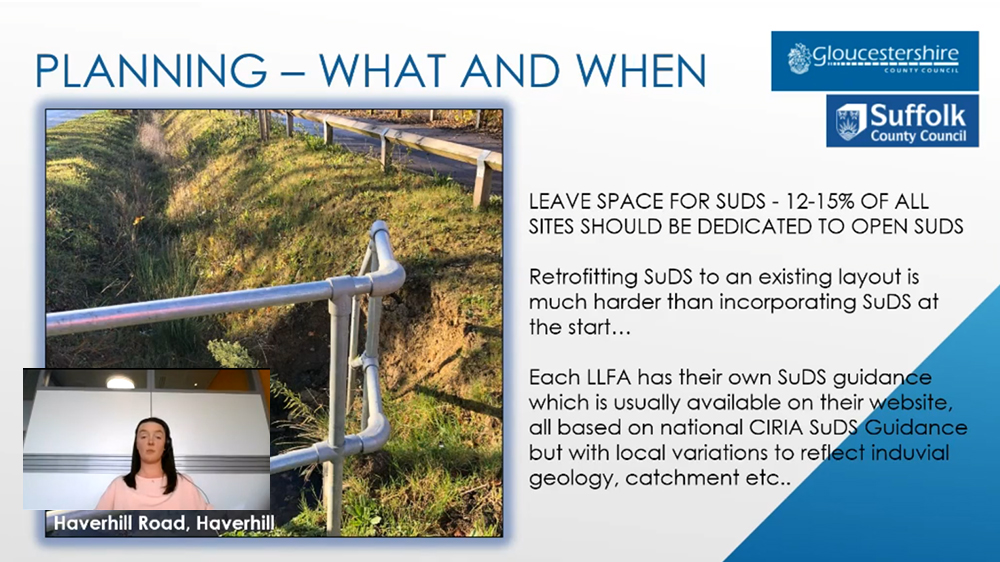
Hen Abbott – Principal Highways Coordinator at Gloucestershire County Council & Hannah Purkis – Flood & Water Engineer at Suffolk County Council
Both joined forces with Hen having previously held the role at Suffolk CC, provided an overview of the challenges faced by local authorities in delivering and adopting high quality SUDS through the planning system, detailing how different silos within local authorities can work together! Hannah also highlighted that they have produced their own SuDS guidance which helps with communicating expectations and works with LPA to help them understand why SuDS are so vital – Planning and policy continues to be a challenge across the UK.
Next we welcomed;
John Brewington – Verdant Fields & Consultant for Severn Trent Water with over 20 years’ experience in delivering environmental solutions for the water sector having previously led the smart networks innovation team at Severn Trent and managed the EA’s Midlands Urban River Community initiative.
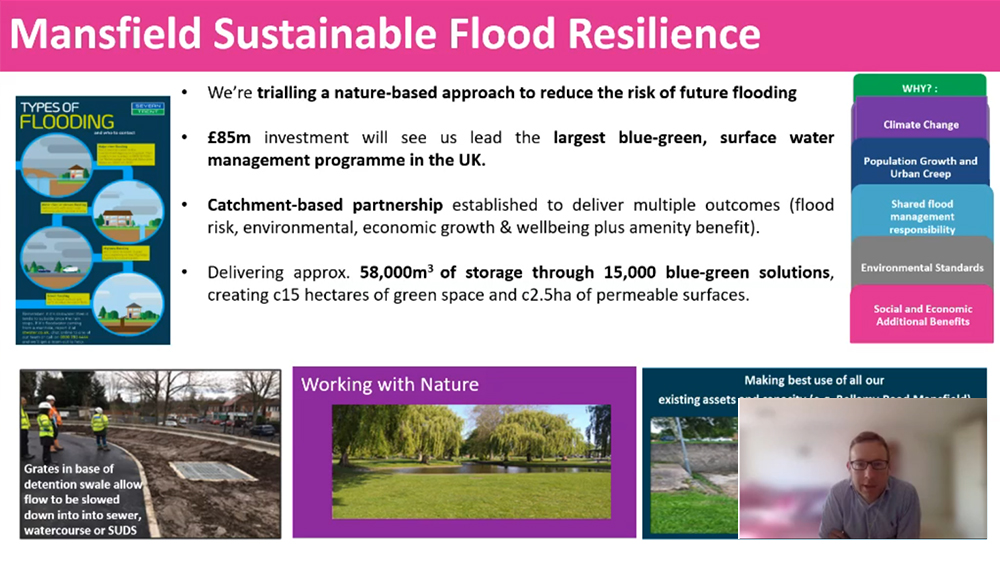
With his consultancy Verdant Fields, John asked can a town wide SuDS retrofit, be simple? Highlighting the approaches made for modelling, manufacture and monitoring as key functions to the Mansfield flood resilience programme – the largest blue-green, surface water management programme in the UK!
There was particular interest in the project relating to match funding, how to engage the community and incentivise on SuDS solutions!
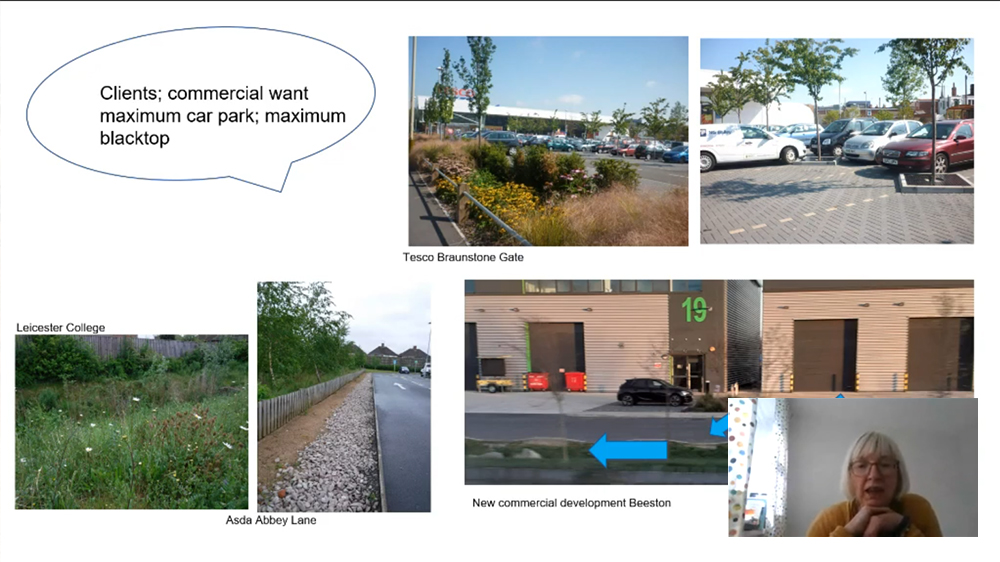
Our final speaker am sure would be known to most, 2018 SuDS champion and true SuDS advocate, Chryse Tinsley – Landscape Planner, Leicester City Council using her analogy of the carrot and the stick she shared some fantastic successful examples of nature based solutions being used at range of scenario developments, including “SuDS is Fun” in schools. Her enthusiasim on the subject was warming and welcomed by everyone!
Lots of questions including how to challenge developers on cost, CDM regulations, Biodiversity Net Gain, Calculating drainage and even types of bioretention soils and adoption of permeable paving.
As you can see a real mix of backgrounds with lots covered in the session, plenty of case study examples including range of GBU’s MicroSuDS solutions – why not listen here to learn more!