Water Resilient Cities

GreenBlue Urban’s Head of Public Relations & Strategic Partnerships, Charlotte Markey, recently had the privilege of traveling to Bruges, Belgium with a member of the Natural Infrastructure Team from Plymouth City Council. Together they met collaborators from France, Belgium, and the Netherlands to discuss an EU Interreg project which focuses specifically on communities in what the EU defines as the ‘2 Seas’ area.

This includes the regions of:

  • England: South-West, South-East and East of England
  • France: Departments of Nord, Pas de Calais, Somme and Aisne
  • Belgium (Flanders): Provinces of West-Flanders, East-Flanders and Antwerp
  • The Netherlands: Province of Zeeland and the coastal areas of the Provinces of Zuid-Holland, Noord-Holland and Noord-Brabant
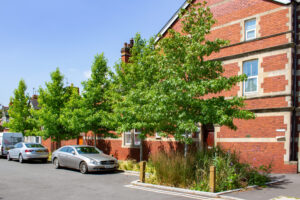
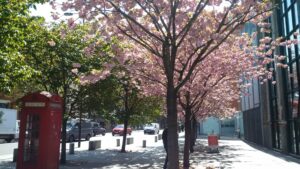
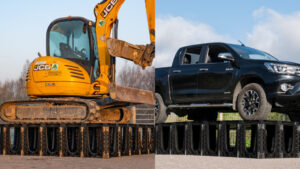
Presenting to our partners on the potential of LID / SUDs tree pit design in retrofit scenarios, provided a vital focal point for the basis of our funding proposal. It is apparent that knowledge of SUDs and nature based solutions for water management varies widely across the 2 Seas region, which makes the cross-border collaboration so vital for the future resilience of European cities to climate change and increasing health and liveability.

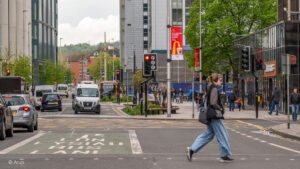
The main objectives of the project are to improve the capacity of cities in this area to adapt to heavy rainfall events, through innovative and creative LID / SUDs solutions in a retrofit context. One of the key focuses of the SUDs interventions would be to deliver schemes in constrained public spaces which would deliver societal benefits as well as saving public money through cost effective design and implementation.

There are many institutional barriers to achieving the most cost effective and desirable green and blue interventions across the urban areas which comprise the 2 Seas region. One of the major outputs of the project will be to address these obstacles through a demonstration of the potential of creative partnerships on five key demonstration sites. GreenBlue Urban is proud to be a major partner in this project. We will continue working to create innovative new solutions for such retrofit scenarios, specifically in older town and city centres with complex and often restrictive existing infrastructure.

Through establishing larger networks to facilitate knowledge exchange between private and public sector partnerships, our aim is to provide  transferable and replicable solutions which will be multifunctional,  providing the essential ecosystems services to the urban environments into which they are integrated.
For decades, the way we designed drainage in our towns and cities followed a simple principle: get water away from

A ‘Super El Niño’ is set to make 2027 one of the hottest years on record, with temperatures potentially exceeding

What stood out at UKREiiF 2026, across a range of sessions and conversations, was how often different speakers and disciplines

Raingardens are designed to manage rainfall where it lands. Instead of sending water straight into underground pipes, they slow, store

Urban tree populations in cities around the world are under pressure. Despite the clear benefits trees bring, including cooling streets,

When the phrase root girdling appears in a specification meeting or planning discussion, it tends to stop the conversation cold.

One of the biggest challenges facing the urban greening industry today is how we respond effectively to the accelerating climate

Planting a tree is often framed as an act of optimism, a gesture toward a greener, more hopeful future. But

Sustainable Drainage Systems (SuDS) are most effective when they are treated as a core part of urban design rather than

Designing urban landscapes that successfully support both healthy tree growth and the structural needs of pavements, pathways, and vehicle areas