This month, the landscape architecture community is heading to Los Angeles for the ASLA Conference on Landscape Architecture. It’s a fitting place to think about what we’re asking our urban landscapes to do and whether we’re designing them for what comes next.
Los Angeles offers a clear example of the increasingly complex climate conditions cities are being asked to design for. In the span of just a few years, the region has experienced record-breaking heat, devastating wildfires, prolonged drought and intense atmospheric-river storms capable of placing enormous pressure on streets, drainage systems and other urban infrastructure. Neighborhoods with limited canopy are particularly vulnerable to extreme heat, while periods of water scarcity can be followed by intense rainfall that places additional demands on existing infrastructure.
Los Angeles isn’t unique. Cities across the country are confronting increasingly complex conditions and asking infrastructure designed for the challenges of the past to perform in a very different future.
What Do We Need to Rethink?
The traditional response to greater infrastructure demands has often been to engineer bigger: more drainage capacity, more conveyance and more hard infrastructure. Those systems remain essential, but they cannot deliver everything cities increasingly need from their public realm. Impervious urban surfaces can intensify heat and prevent rainfall from infiltrating where it falls, while increasingly complex weather conditions are placing greater demands on existing infrastructure.
What needs to change isn’t just the hardware. It’s the mindset. We need to stop treating heat mitigation, stormwater management and resilience planning as separate problems solved by separate departments and start treating the living systems in our cities — trees, soil and water — as core infrastructure, not decoration.
Urban Trees: One of Our Most Versatile Tools
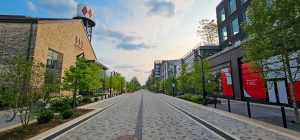
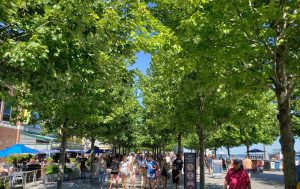
Urban trees have an important role to play in creating more resilient cities. As trees mature, their expanding canopies provide shade and cooling, intercept rainfall, support biodiversity, improve air quality and create healthier, more comfortable streets and public spaces. Few elements of the urban landscape have the potential to deliver such a broad range of benefits at the same time.
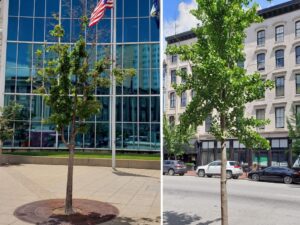
The value of mature urban trees is well established, but those benefits depend on trees having the opportunity to establish, grow and reach maturity. A newly planted tree may represent progress toward a canopy goal, but planting a tree and growing canopy are not the same thing.
The canopy cities are counting on decades from now cannot simply be assumed at the time of planting. A young tree placed in limited, compacted soil with inadequate rooting space or access to water may never develop into the mature tree envisioned in a rendering, urban forest plan or canopy target. If we want trees to deliver meaningful benefits over the long term, we have to design the conditions that allow them to get there.
That requires thinking about urban trees differently. Rather than treating them as a landscape element added after the major infrastructure decisions have been made, we need to consider them as long-term infrastructure investments and give their performance the same level of design consideration we give the other systems our cities depend on.
Treat Green and Blue Infrastructure Like Gray
When we design a stormwater system, we don’t simply install a pipe and hope it has enough capacity. We calculate expected flows, understand site conditions, specify appropriate components, coordinate with surrounding infrastructure and consider how the system will perform over its intended life.
Green and blue infrastructure deserve the same rigor.
Urban trees are long-term investments. If we expect a tree planted today to provide meaningful shade, cooling, stormwater benefits and canopy decades from now, its long-term performance needs to be considered from the beginning of the design process.
That means moving beyond “Where can we fit a tree?” and asking a more important question: “What will this tree need to become the tree we’re designing for?”
One of the most important changes we can make is to design for the mature tree rather than the tree at installation.
At the design stage, the tree is still largely an idea on a plan. That’s also when project teams have the greatest opportunity to influence its long-term performance. Soil volume can be allocated, rooting areas coordinated with utilities and pavement, stormwater pathways considered, species matched to site conditions and below-ground infrastructure incorporated before competing requirements make those decisions more difficult.
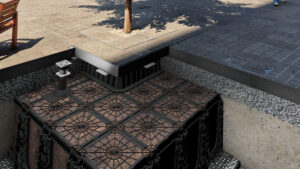
Successful urban trees start with the infrastructure that supports them. Healthy urban trees don’t happen by accident; they are designed, and much of that design happens where we can’t see it.
Great Landscapes Start Below the Surface
The canopy may be the most visible part of a successful urban tree, but its performance is closely connected to the conditions below ground. Soil, roots and water function together as a system, which means each needs to be considered from the beginning of the design process.
Soil Volume Matters.
Trees need access to adequate volumes of healthy, uncompacted soil, yet in dense urban environments, usable soil is often one of the first things constrained by pavement, utilities and other infrastructure.
Providing sufficient rootable soil isn’t simply a matter of making a planting hole larger. It requires considering how much soil a mature tree will need, where that soil can be accommodated within the streetscape and how roots will continue to access it as the tree grows.
When adequate soil volume is planned from the beginning, the project creates the foundation for long-term growth rather than asking the tree to adapt to whatever space is left over.
Root Space Matters.
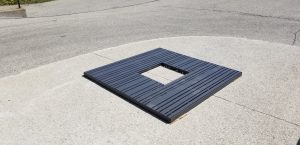
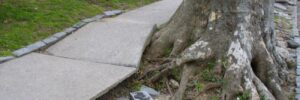
Roots don’t stop growing when they reach the edge of a tree opening. They seek the conditions they need, and when appropriate rooting space isn’t available, conflicts can develop with pavement, utilities and surrounding infrastructure.
That shifts the design question from “How do we contain the roots?” to “Where do we want the roots to grow?”
Creating intentional rooting space and pathways can give trees access to the soil they need while helping them coexist with the built environment above and around them. The objective isn’t simply to find enough space to install a young tree; it’s to create an environment capable of supporting the mature tree the project ultimately intends to deliver.
Water Matters.
Water may offer one of the greatest opportunities to rethink the relationship between urban trees and the infrastructure surrounding them.
Cities can experience water scarcity and intense rainfall within the same year, yet landscapes and stormwater systems have traditionally been designed as separate systems. Landscapes need water to thrive, while conventional stormwater systems are often designed to collect rainfall and move it away as efficiently as possible.
There is an opportunity to look at rainfall differently. Where site conditions allow, runoff from streets, sidewalks and other hard surfaces can become a resource for nearby landscapes rather than simply a volume to be conveyed elsewhere.
Designing trees, soil and water together can support tree establishment and long-term growth while contributing to broader stormwater and resilience objectives. Rather than treating green, blue and gray infrastructure as competing systems, we can design them to complement one another.
Designing for What Comes Next
Extreme weather isn’t going away, and no single form of infrastructure will solve the challenges cities are facing.
Urban trees can be part of the response, but only if we design them to become the mature canopy we’re counting on decades from now. That means treating the conditions below ground with the same seriousness we give the infrastructure we can see.
It means considering soil volume before the space disappears, planning where roots will grow before conflicts develop and thinking about water as part of the landscape rather than as an entirely separate system.
Most of all, it means recognizing that planting a tree is only the beginning of the investment. The real measure of success is whether we’ve created the conditions for that tree to grow, mature and deliver the benefits we designed it to provide.
That’s what it means to rethink urban trees: designing for the outcome, not simply the installation.
Healthy urban trees don’t happen by accident. They are designed.