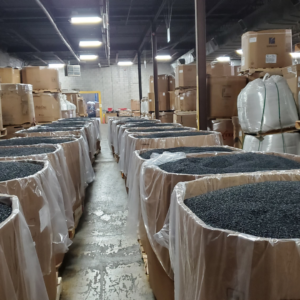
To be sure, our environment would be cleaner and safer if we eliminated harmful plastic products altogether. We are wasteful. A trip to the local landfill will reveal thousands of plastic bottles that should have been recycled. Environmentalists are continuing to fight the problem of waste daily, but they’re finding that plastics don’t necessarily come close to being society’s biggest waste and pollution issue. In fact, 2018 solid waste in the form of paper was at 3.520 million tonnes, while plastic was 0.355.
However, that doesn’t mean that the problem of plastics can be ignored. In Canada, more than one-third of our plastics are created for single-use products of packaging, and many ocean conservancy and environmental groups are taking a stand. They are asking the government to add any plastic generated as a waste to the Schedule 1 List of Toxic Substances under the Canadian Environmental Protection Act. By doing so, the federal government would be able to pass laws to do the following:
- Require producers of products that contain plastic to collect and recycle them
- Prevent exports of plastics to developing countries
- Require recycled plastics to be used in making products and packaging
- Ban single-use plastics that aren’t collected
- Reduce microplastic waste from clothing and other products that may pollute fish
According to a study for Environment and Climate Change Canada, Canada’s plastic recycling rate is 9%, meaning 91% of plastic waste ends up in landfills, burns and along rivers, lakes and oceans. Researchers at the University of Toronto have concluded that the scientific evidence of the impacts of plastic pollution is clear, “…plastic pollution of all shapes and sizes can affect organisms across all levels of biological organization.”
What is society’s love affair with plastic? And do we really need it? The use of plastics in some instances actually helps us reduce the amount of waste and environmental damage in the long run!
- Less oil and fuel are needed in our cars because plastics make them lighter.
- We save oil, coal, gas, and electricity because plastics insulate our homes.
- Plastics keep our food fresh longer, preventing spoilage and reducing the massive carbon footprint that food production leaves.
GreenBlue Urban Canada is fully committed to reduce, reuse and recycle plastics. Our North American manufacturing operation utilizes 100% recycled plastics in the production of our RootSpace® Airform soil support systems.