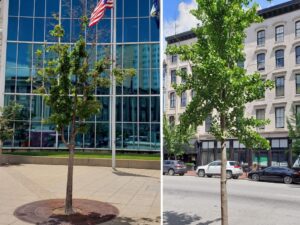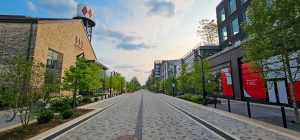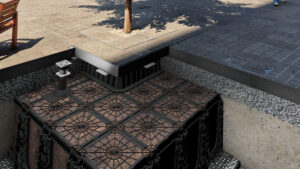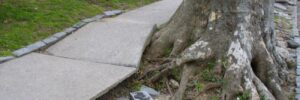
Soil in urban environments rarely provides the conditions trees need to grow and thrive. Limited rooting space, compaction, and conflicts with surrounding infrastructure all work against long-term tree performance.
That’s why designers and contractors use soil cells — not just to support pavements, but to create a stable, healthy soil environment beneath them.
We’ve put together a short video that shows how crews install planting soil in a RootSpace® Soil Cell System. Soil placement plays such a critical role in long-term tree performance and pavement stability.
In the video, we walk through the process step by step. Installers place planting soil directly into open soil cells, compact it in controlled lifts, and verify density before installing the final lids. This method creates consistent density, prevents settlement, and supports healthy root growth beneath urban surfaces.
RootSpace® soil cells deliver a 97% void ratio, maximizing space for planting soil while allowing air, water, and roots to move freely throughout the system.
- During installation, crews place soil directly into open soil cells rather than through the lids.
- This open-top access allows installers to walk the system and evenly compact soil in controlled lifts, ensuring uniform density across the entire soil volume.
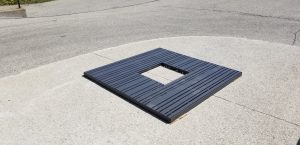
- Along the perimeter, crews temporarily install lids for alignment, then remove them so they can top up, compact, and verify soil before securing the final lids.
- Once crews fully fill and compact the system, they install the remaining lids.
This approach eliminates air pockets, prevents long-term settlement, and supports healthy root growth — all while maintaining pavement stability under heavy urban loads.
It’s a quick look at the installation details that make a lasting difference.