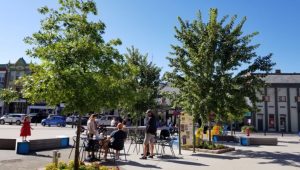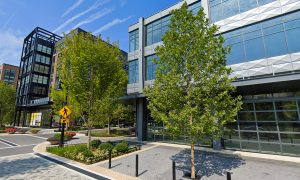
As cities across North America face rising temperatures, more frequent storm events, aging infrastructure, and growing public health concerns, urban canopy is becoming a central part of long-term resilience planning.
What was once treated primarily as a beautification strategy is now being designed, funded, and evaluated as essential urban infrastructure — and the reasons why reveal how much the stakes have changed.
From Amenity to Infrastructure
Healthy mature canopy does something no single piece of city infrastructure can do alone: it addresses multiple urban priorities simultaneously. It reduces surface temperatures, intercepts stormwater, improves air quality, lowers energy demand, and creates the kind of public spaces that measurably improve quality of life.
Extreme heat events, in particular, are forcing cities to rethink how streets, neighborhoods, and public spaces are designed. Communities with limited canopy coverage experience significantly higher surface temperatures, increasing health risks for the most vulnerable populations. As heat becomes a more frequent and severe urban challenge, the presence or absence of mature canopy is no longer an aesthetic question — it is a public health one.
This shift in understanding is driving a shift in investment. Cities are no longer setting canopy targets simply to plant more trees. They are setting them because mature urban canopy is one of the most cost-effective tools available for climate adaptation, stormwater management, and long-term resilience.
Cities Are Moving Beyond Tree Planting Initiatives
For most of urban forestry’s history, success was measured in planting counts. That metric is beginning to break down.
Cities are recognizing that planting trees and delivering canopy are two different outcomes. A newly planted sapling may take decades to deliver meaningful shade, cooling, and stormwater interception. If it fails prematurely due to poor growing conditions, the intended resilience benefits are delayed or lost entirely — and the city starts the cycle again.
The more useful question isn’t how many trees were planted last year. It’s how many are still growing — and whether the conditions exist for them to reach maturity.
The Challenge is Below Ground
The most significant constraint on urban canopy growth isn’t visible from the street.
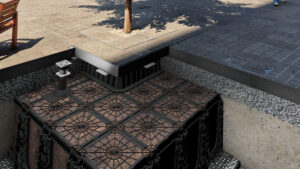
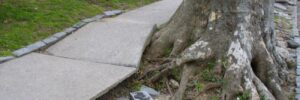
In dense urban environments, trees compete for space with pavement, utilities, drainage systems, transportation infrastructure, and compacted soils. Without adequate rootable soil volume and access to water and oxygen, many trees struggle to survive long enough to reach maturity.
The constraint is structural, not horticultural, and it can only be addressed at the design stage, before pavement goes down and utilities are in the ground.
This is leading cities, planners, and landscape architects to think fundamentally differently about what a tree planting specification actually needs to include.
Designing for Long-Term Performance
As urban canopy becomes more closely tied to climate adaptation, public health, and infrastructure planning, cities are beginning to take a more integrated approach to tree design and specification.
Long-term canopy performance depends on decisions made early in the planning and design process, including:
- soil volume allocation
- stormwater integration
- utility coordination
- lifecycle planning
- infrastructure compatibility
These aren’t supplementary considerations. In an urban environment, they determine whether the investment in planting ever pays off.
The most resilient urban canopy programs are not the ones with the highest planting counts. They are the ones designed, from the ground up, for survival.
The Future of Urban Canopy Planning
Urban canopy is no longer simply an environmental initiative or aesthetic improvement.
It is becoming a central part of how cities approach climate adaptation, public health, and long-term livability — and the design standards expected of it are rising accordingly.
The cities that will achieve their canopy goals in the decades ahead are the ones asking a different question today: not how many trees can we plant, but what does it take for those trees to last.